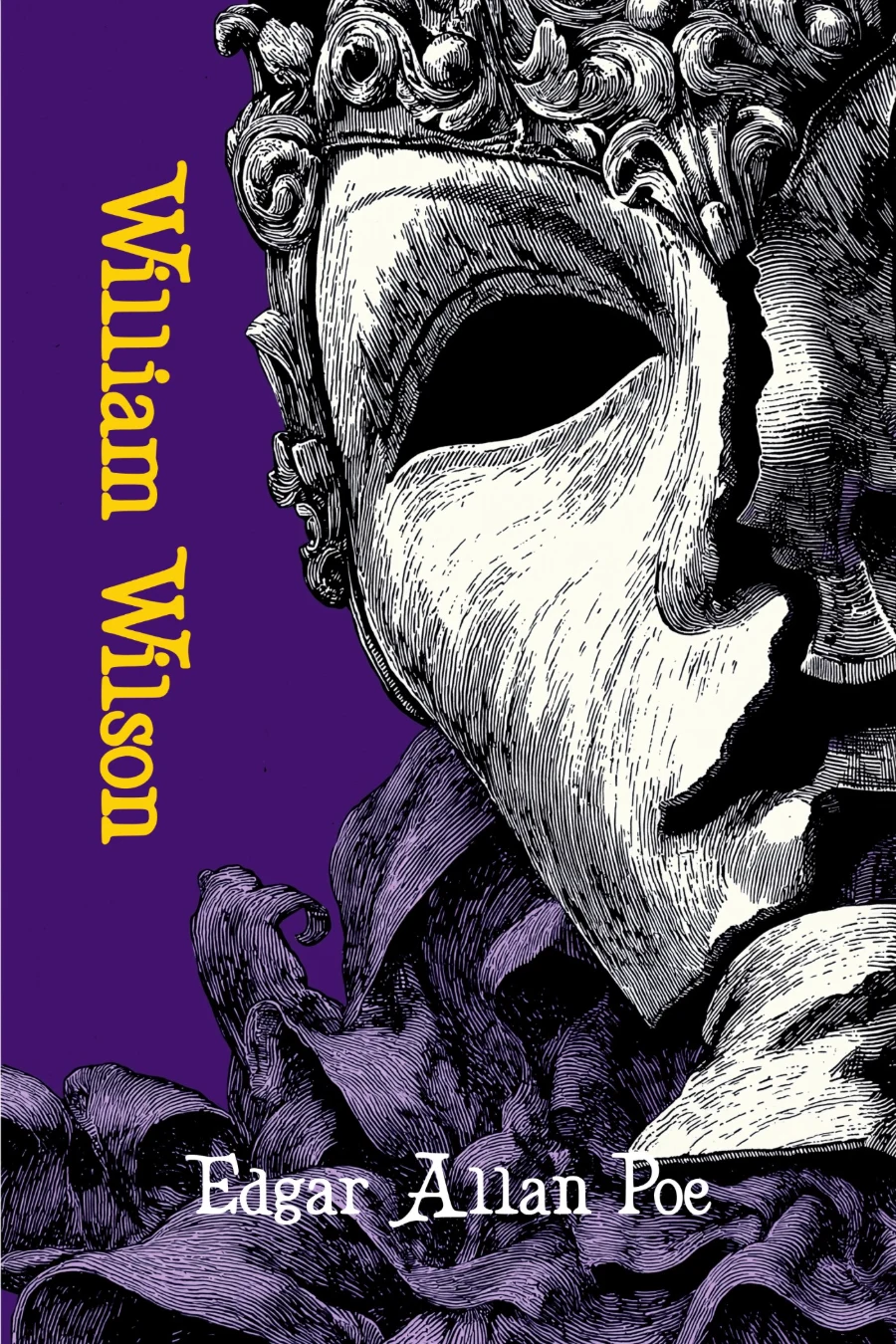
William Wilson
A man confesses his sins from the depths of moral ruin, tracing the descent of his soul back to his earliest years. He will not tell us his real name—William Wilson is a mere substitute—but he insists we listen to the strange persecution that has shadowed him since childhood. At an English boarding school, a boy encounters a peculiar torment: another student who shares not only his name and birthdate but also his physical appearance, his manner of dress, even the particular cadence of his speech. What begins as an uncanny coincidence becomes an inescapable presence, a figure who appears at crucial moments throughout the narrator's life, always whispering warnings, always interfering with his darkest impulses.
Poe constructs this tale as a masterwork of psychological gothic, where the supernatural elements remain perpetually ambiguous. The atmospheric gloom of the old academy, with its labyrinthine passages and dreamlike chambers, establishes a world where reality and hallucination blur. The narrator's voice carries the fevered intensity characteristic of Poe's confessional mode—unreliable, defensive, yet strangely compelling in its desperate need to explain. The story raises profound questions about identity, conscience, and the nature of the self without ever settling into comfortable answers. Is this doppelgänger real or imagined? Is he persecutor or protector? The narrative tension comes not from external danger but from this central mystery of doubling, and from watching a man wage war against something he cannot escape.
This compact story endures as one of the most sophisticated explorations of the double in nineteenth-century literature, influencing countless works that followed. It rewards readers who appreciate psychological complexity and moral ambiguity, those who find the greatest horror not in monsters but in the human capacity for self-destruction. Poe offers no easy resolutions, only the haunting suggestion that our greatest enemy might wear our own face.