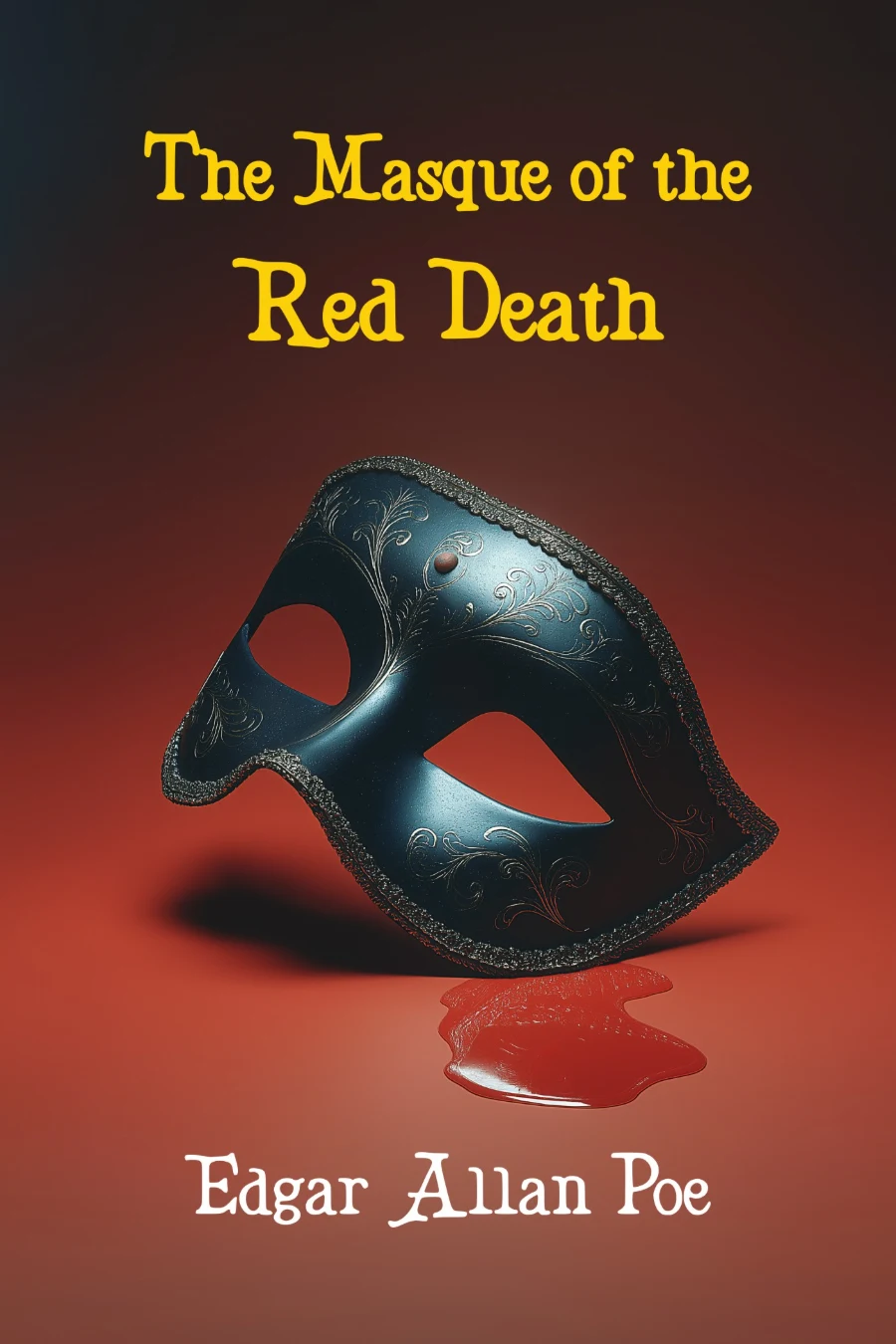
The Masque of the Red Death
A kingdom ravages under the grip of a terrible plague known as the Red Death, a pestilence so swift and horrific that it kills within half an hour, marking its victims with scarlet stains and bleeding. While the land suffers, Prince Prospero retreats with a thousand healthy courtiers into the fortified seclusion of one of his castellated abbeys, welding the gates shut against the outside world. There, surrounded by abundance and every imaginable entertainment, the privileged gather to wait out the pestilence in luxury, believing their wealth and walls can shield them from death itself.
Poe constructs a fever dream of gothic decadence, presenting seven color-coded rooms that progress from east to west through the abbey, each more unsettling than the last. The prose moves with the rhythm of delirium, building its atmosphere through vivid sensory details: the discordant music of an orchestra, the flicker of brazier light filtering through stained glass windows that cast eerie hues upon the revelers, and the ominous chiming of a giant ebony clock that stops the masqueraders mid-gesture. The story operates as both visceral horror and moral allegory, interrogating humanity's relationship with mortality, the illusions of control that privilege provides, and the desperate psychology of denial. The masquerade itself becomes a portrait of desperate hedonism, the courtiers throwing themselves into increasingly wild festivities as if frenzied pleasure might somehow constitute an argument against their own vulnerability.
This brief tale rewards readers who appreciate gothic horror that functions on multiple levels—both as a chilling atmospheric piece and as a philosophical meditation on death's democracy. Poe's compressed narrative demonstrates his ability to create mounting dread within a confined space, making every architectural detail and color choice meaningful. Those drawn to literature that confronts existential questions through symbolic landscapes will find this work endlessly rich for contemplation.