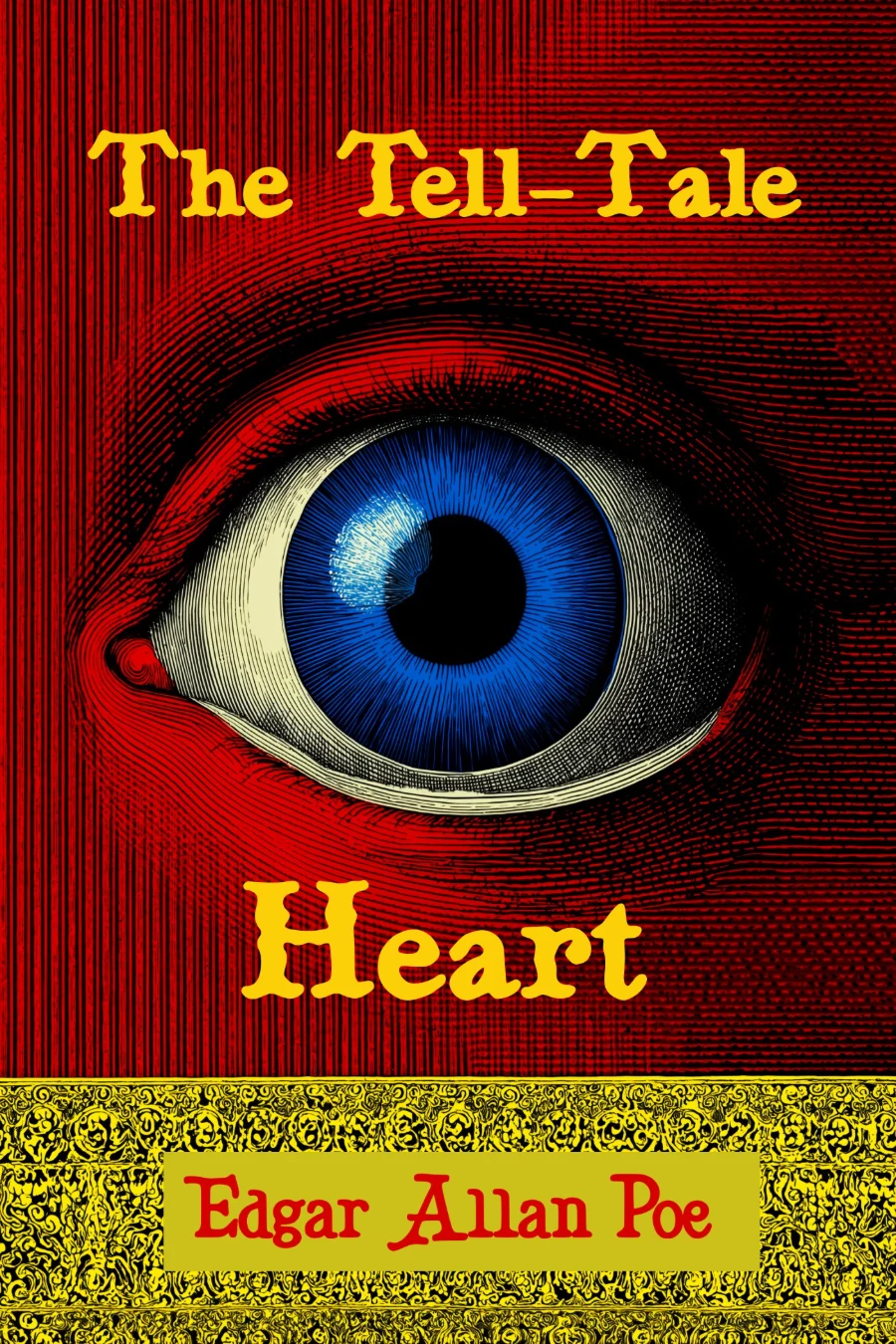
The Tell-Tale Heart
11 min
2,153 words
en
A narrator insists on their sanity with such feverish intensity that the claim itself becomes suspect. They address us directly, urgently, demanding we acknowledge their rationality even as they confess to an act driven by something they can barely articulate—an old man's eye, pale blue and filmed over, that has become an unbearable fixation. We are trapped in close quarters with this voice, following them through their meticulous preparations and sleepless nights, unable to look away from their spiraling obsession.
Poe constructs a psychological pressure chamber where every sensory detail becomes amplified to an agonizing degree. The narrator hears things with preternatural acuteness—the groaning of hinges, the beating of a heart—and this heightened perception becomes both a source of pride and torment. The prose itself mirrors this fevered state, building in rhythmic intensity, circling back on itself with the relentless logic of madness. What begins as a rational explanation devolves into something far more unsettling: a portrait of a mind that cannot distinguish between its own elaborate reasoning and complete psychological dissolution.
This brief tale endures because it captures the uncanny experience of being inside a consciousness at war with itself. Poe strips away all comfortable distance between reader and narrator, forcing an uncomfortable intimacy with someone whose grip on reality is profoundly unstable. The story rewards readers who appreciate psychological horror that operates through suggestion and accumulation rather than shock, and those drawn to the question of how a mind justifies the unjustifiable to itself. It remains a cornerstone of the genre precisely because it understands that the most terrifying confessions are those delivered with perfect conviction.
PublisherKafka
LanguageEnglish
Source
short-fiction-edgar-allan-poe