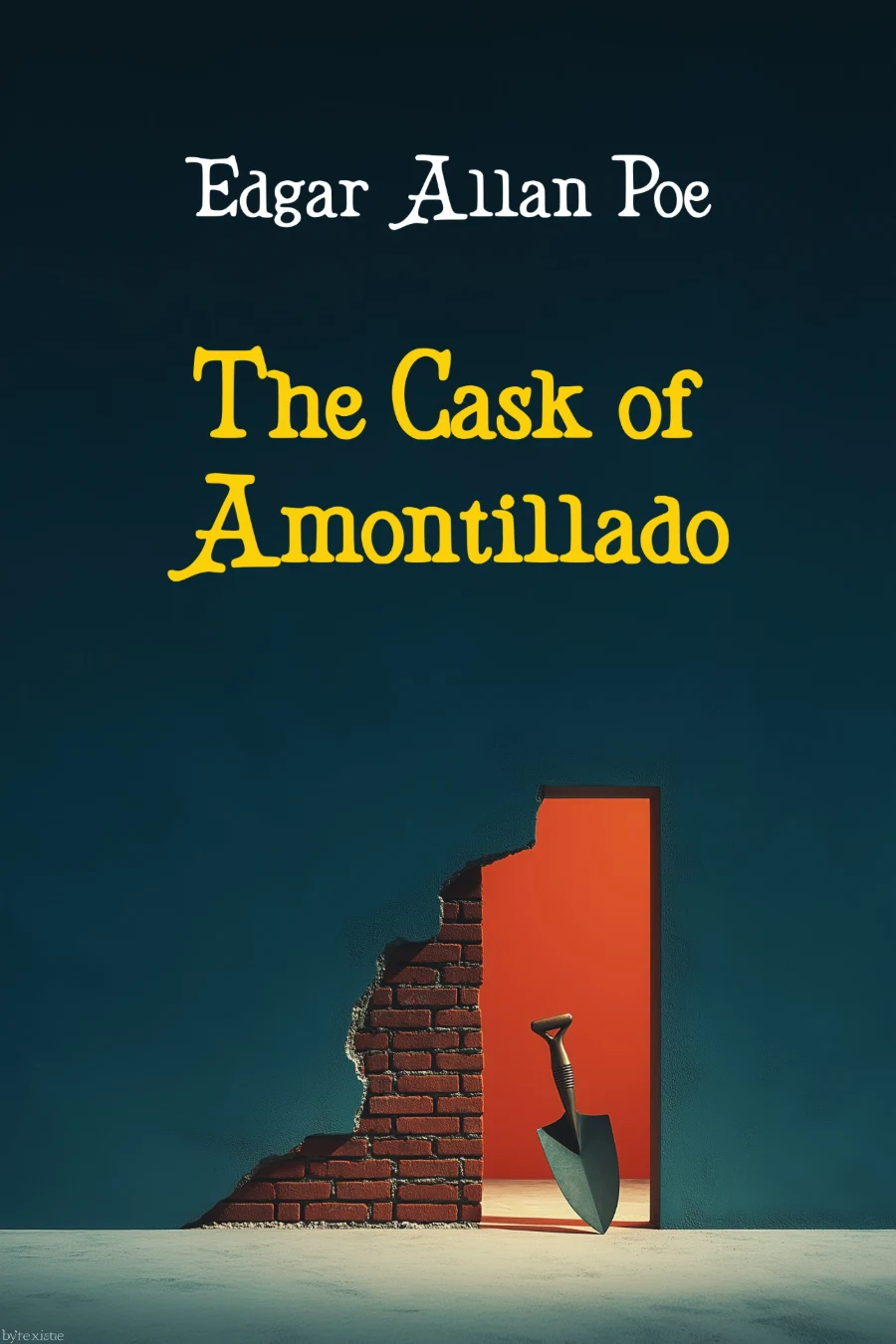
The Cask of Amontillado
A man nurses a grievance, one he claims has reached the point of injury and insult beyond endurance. During the madness of carnival season, when the streets overflow with costumed revelers and wine flows freely, he encounters his unsuspecting target—a fellow connoisseur of wines who prides himself on his discriminating palate. With the promise of a rare vintage, he leads his companion away from the festivities and down into the catacombs beneath his family palazzo, where bones line the walls and the air grows thick with nitre. What begins as a casual wine-tasting excursion descends deeper and deeper into the earth, step by step, away from light and witnesses.
Poe constructs his tale as a confession delivered fifty years after the fact, yet the narrator reveals his memories with such vivid relish that we feel the dampness of those underground vaults and taste the Medoc on our tongues. The story operates on the knife-edge of unreliability—we receive only one perspective, and it belongs to a man who may be mad, who speaks in the measured tones of aristocratic courtesy even as he describes actions born of malice. The carnival setting creates a disorienting contrast between the riotous joy above ground and the cold silence below, between masks worn in celebration and the masks people wear in daily life. Every detail—the jingling of fool's bells, the family motto about revenge, the increasing intoxication—serves the story's suffocating logic.
This remains one of the most chilling examinations of premeditated vengeance in literature, remarkable for what it accomplishes in just a few pages. It rewards readers who appreciate psychological precision over supernatural horror, who find terror not in ghosts but in the human capacity for calculation and cruelty. Those drawn to dark ironies, claustrophobic atmospheres, and the question of what constitutes justice versus obsession will find themselves unable to forget their own descent into those catacombs.