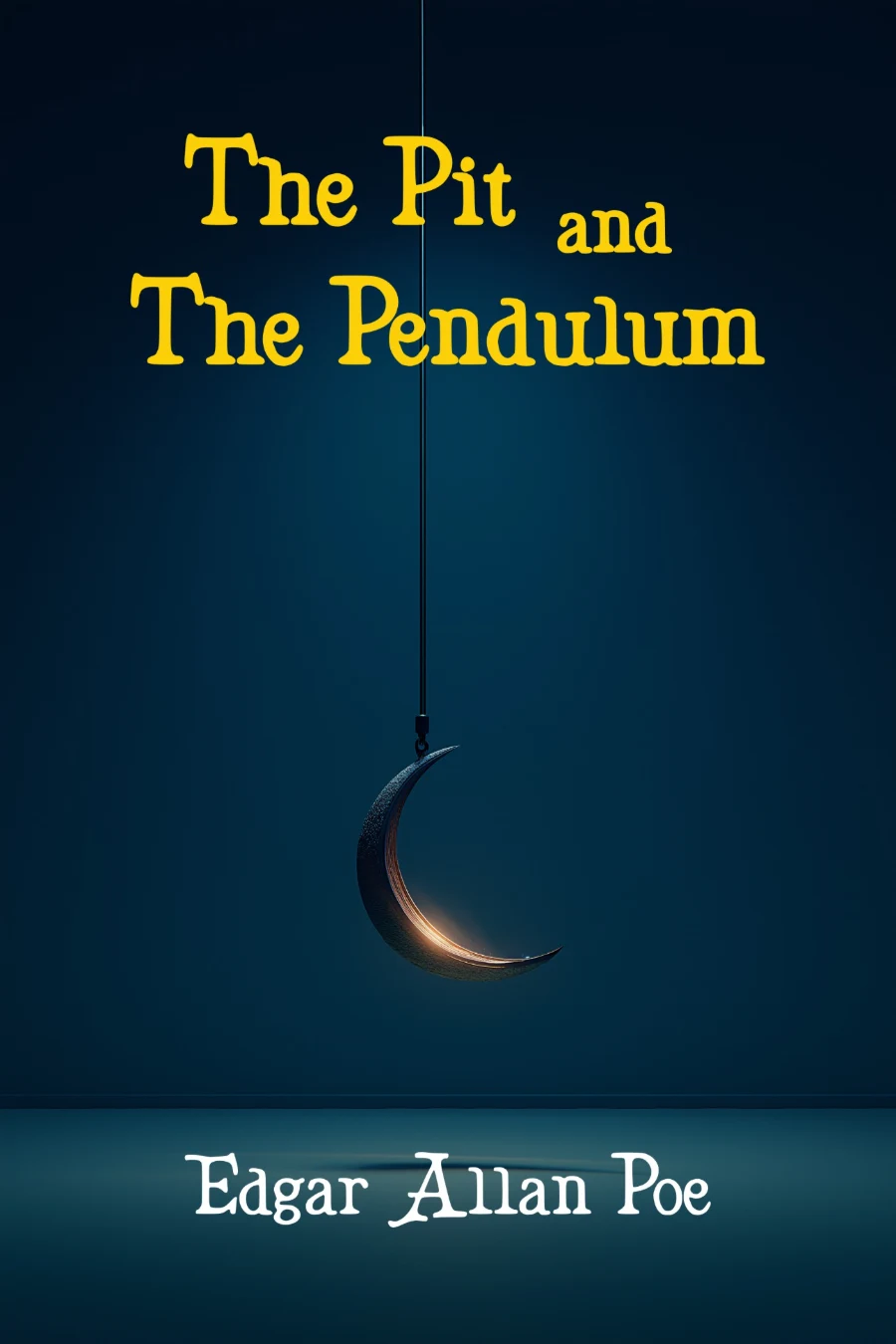
The Pit and the Pendulum
A prisoner awakens in absolute darkness, sentenced by the Spanish Inquisition to a fate unknown. Disoriented and alone, he finds himself in a stone chamber whose dimensions he can only guess at, its dangers hidden in the impenetrable blackness. With only his trembling hands to guide him, he must explore the boundaries of his cell, knowing that his captors have designed this space with exquisite attention to his destruction.
Poe constructs a masterclass in sustained psychological terror, stripping away everything but the raw mechanics of fear. The horror here is not supernatural but engineered—methodical, deliberate cruelty translated into architecture. As the narrator discovers each new threat lurking in his prison, the story becomes a meditation on the mind under extreme duress, oscillating between desperate hope and crushing despair. The prose itself tightens like a noose, creating claustrophobic sentences that mirror the shrinking options available to the condemned man. Time becomes elastic and unreliable; consciousness itself proves slippery as unconsciousness offers the only escape from awareness of impending doom.
What gives this tale its enduring power is its distillation of existential dread into physical space. Every Gothic detail serves a purpose beyond atmosphere—the darkness, the vermin, the stone walls themselves become instruments of torture. The story rewards readers who appreciate psychological precision over gore, who find terror not in what is shown but in what is anticipated. It speaks to anyone who has felt trapped by circumstances beyond their control, who has had to marshal their wits against impossible odds, who understands that sometimes survival depends on nothing more than the ability to remain conscious one more moment.