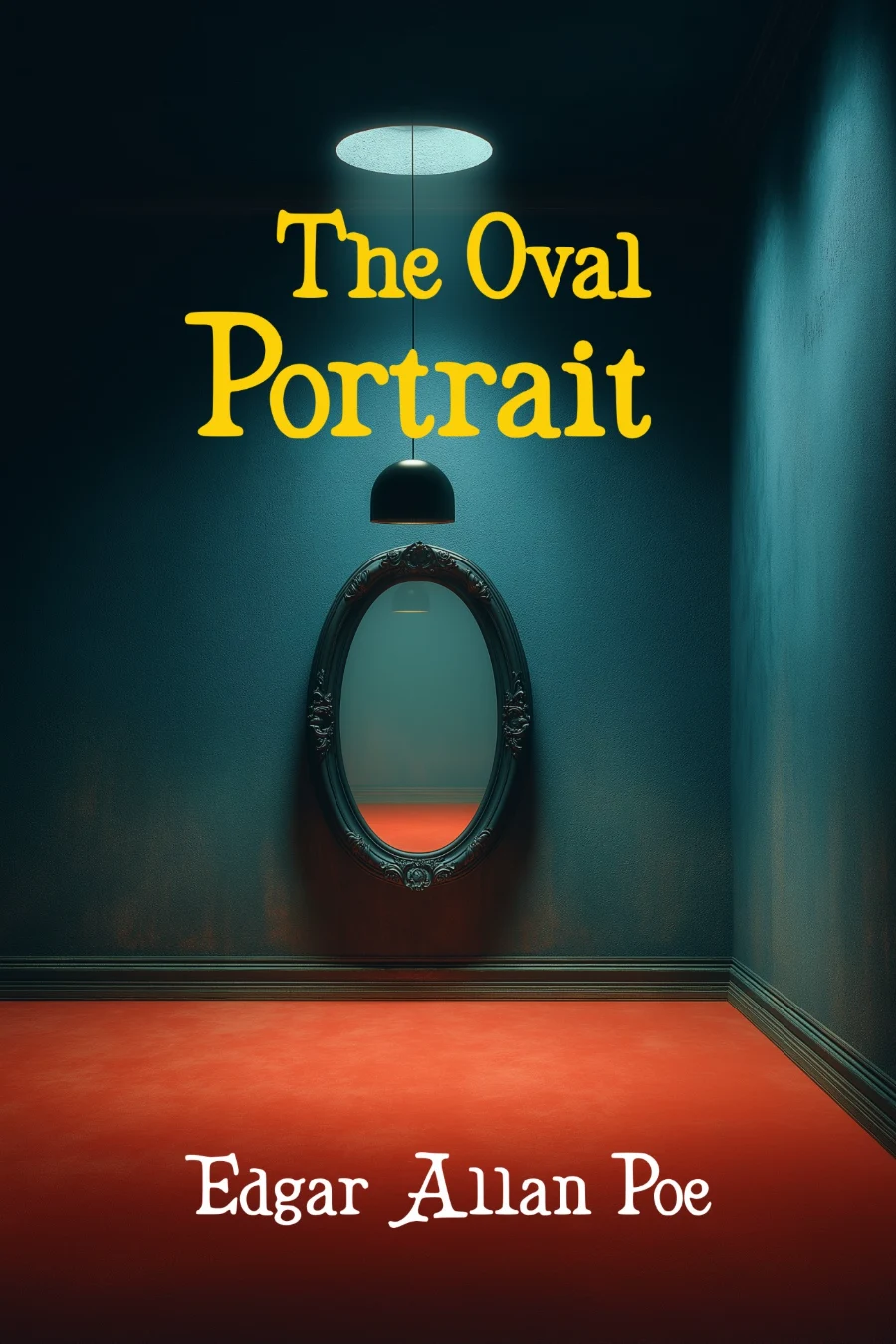
The Oval Portrait
7 min
1,294 words
en
A wounded and delirious traveler seeks refuge in a desolate château in the Apennines, taking shelter in one of its remote and decaying apartments. Unable to sleep, he discovers the room is filled with paintings and begins to examine them by candlelight, aided by a small catalog that describes each work. Among the many portraits, one in particular arrests his attention—an oval-framed image of a young woman so lifelike that it seems to breathe. Compelled by its uncanny vitality, he turns to the catalog to learn the painting's history.
Poe constructs this brief tale as a meditation on the relationship between art and life, exploring the dangerous territory where aesthetic obsession eclipses human connection. The story operates through a frame-within-a-frame structure, creating layers of narrative distance that gradually collapse as the reader moves deeper into the portrait's origins. The atmosphere is quintessentially Gothic—candlelit chambers, crumbling architecture, and a fevered consciousness all contribute to a dreamlike quality where the boundaries between the real and the represented grow disturbingly thin. Poe's prose here is unusually restrained for him, almost clinical in its precision, which makes the underlying horror all the more effective.
The work poses unsettling questions about the artist's relationship to his subject and the potential violence inherent in the creative act. What does it mean to capture life on canvas? What might an artist sacrifice, or demand be sacrificed, in pursuit of perfect representation? The story suggests that the completion of great art may require a transaction far more sinister than mere technical skill or aesthetic vision.
This is Poe at his most economical and philosophically provocative, offering readers who appreciate psychological horror distilled to its essence a compact examination of artistic vampirism that lingers far beyond its brief page count.
PublisherKafka
LanguageEnglish
Source
short-fiction-edgar-allan-poe