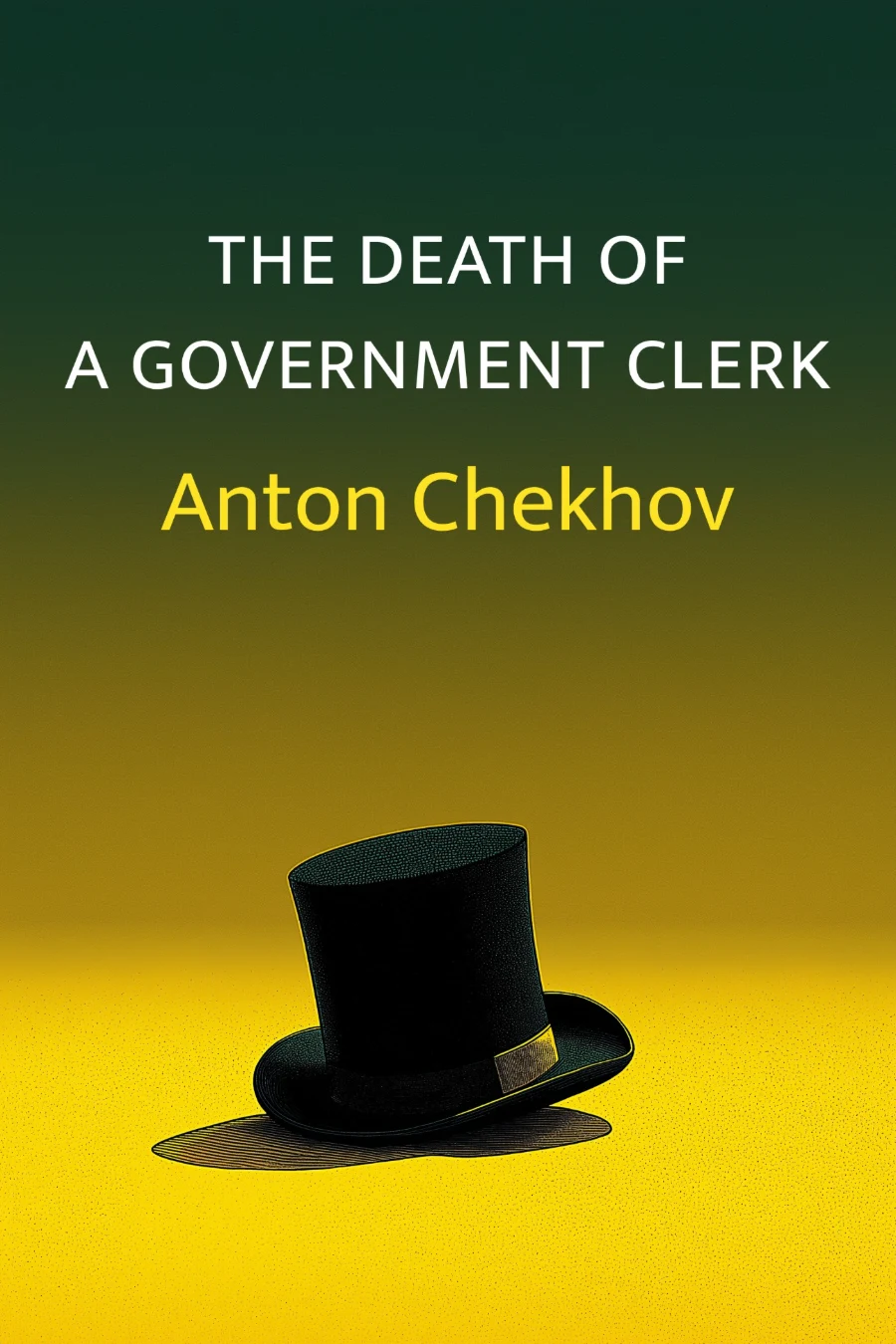
The Death of a Government Clerk
5 min
980 words
en
A government clerk sits in a theater, enjoying an evening at the opera, when a sudden sneeze disrupts his pleasure. The mishap would be trivial—forgettable even—except that his sneeze has landed on the bald head of a high-ranking official seated directly in front of him. What begins as a minor social embarrassment sets in motion a spiral of anxiety that consumes the clerk entirely, transforming a momentary indiscretion into an existential crisis of etiquette and hierarchy.
Chekhov captures the suffocating atmosphere of bureaucratic Russia with surgical precision, where the distance between ranks is measured not just in titles but in the trembling fear that accompanies every interaction between the powerful and the powerless. The story unfolds with a kind of claustrophobic intimacy, following the clerk as his preoccupation with making proper amends grows from reasonable concern into something far more troubling. The author's characteristic restraint makes the progression feel inevitable rather than exaggerated—we watch as ordinary social anxiety metastasizes into obsession, fueled by a system that has trained its servants to internalize their own insignificance.
This brief tale distills Chekhov's genius for revealing the absurdities of human behavior while maintaining profound empathy for his characters. Written with dark humor and economy, it exposes how institutions can warp psychology, how fear of authority can become more dangerous than authority itself. The story rewards readers who appreciate psychological realism rendered in miniature, those drawn to literature that finds the extraordinary within the mundane, and anyone interested in how social hierarchies shape our most private thoughts and irrational behaviors.
Russian RealismSatire19th Century RussiaBureaucracySocial AnxietyClass HierarchyAbsurdismDark ComedyObsessionTsarist RussiaShort StoriesPsychological DeteriorationSocial Paranoia
PublisherKafka
LanguageEnglish
Source
short-fiction-anton-chekhov