Misery
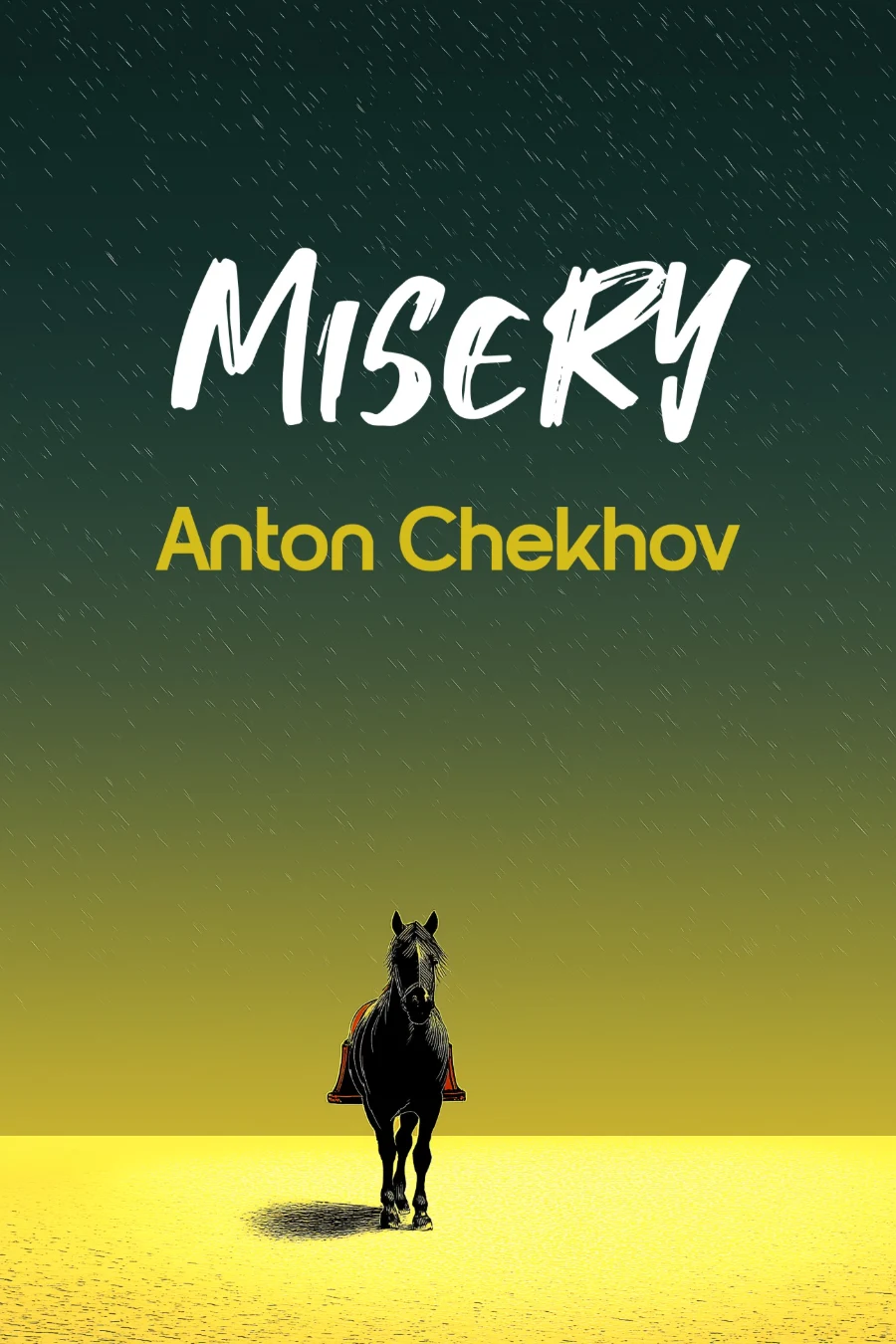
A sledge driver named Iona Potapov works through a snowy evening in the city, ferrying passengers through the winter darkness while carrying an unbearable weight of grief. He has recently suffered a devastating personal loss, and he aches to share his sorrow with someone—anyone who might listen. But the passengers who climb into his sledge are absorbed in their own concerns, indifferent to the old man who transports them, treating him as little more than furniture or a beast of burden.
Chekhov constructs this brief story with remarkable economy, examining the crushing isolation that can exist even in crowded spaces. The snow-covered city becomes a landscape of emotional desolation, where human connection remains tantalizingly close yet impossibly distant. Iona's attempts to speak about his pain are met with irritation, dismissal, or simple distraction—his words falling into the cold air like snowflakes that melt before they're noticed. The prose is spare and unsentimental, allowing the protagonist's loneliness to accumulate with quiet, devastating force.
What distinguishes this work is Chekhov's refusal to elevate or dramatize suffering. There are no grand gestures here, no redemptive moments—only the small, persistent human need to be heard and acknowledged. The story observes how social hierarchies and urban anonymity can render certain people invisible, their inner lives deemed inconsequential by those around them. Yet Chekhov never condescends to his character, instead revealing depths of emotion in a life that others consider unremarkable.
This story rewards readers who appreciate psychological precision and emotional restraint. It speaks to anyone who has felt the paradox of loneliness in company, or who has struggled to make their pain comprehensible to an indifferent world. In just a few pages, Chekhov captures something essential about human solitude and the desperate, often futile search for compassion.