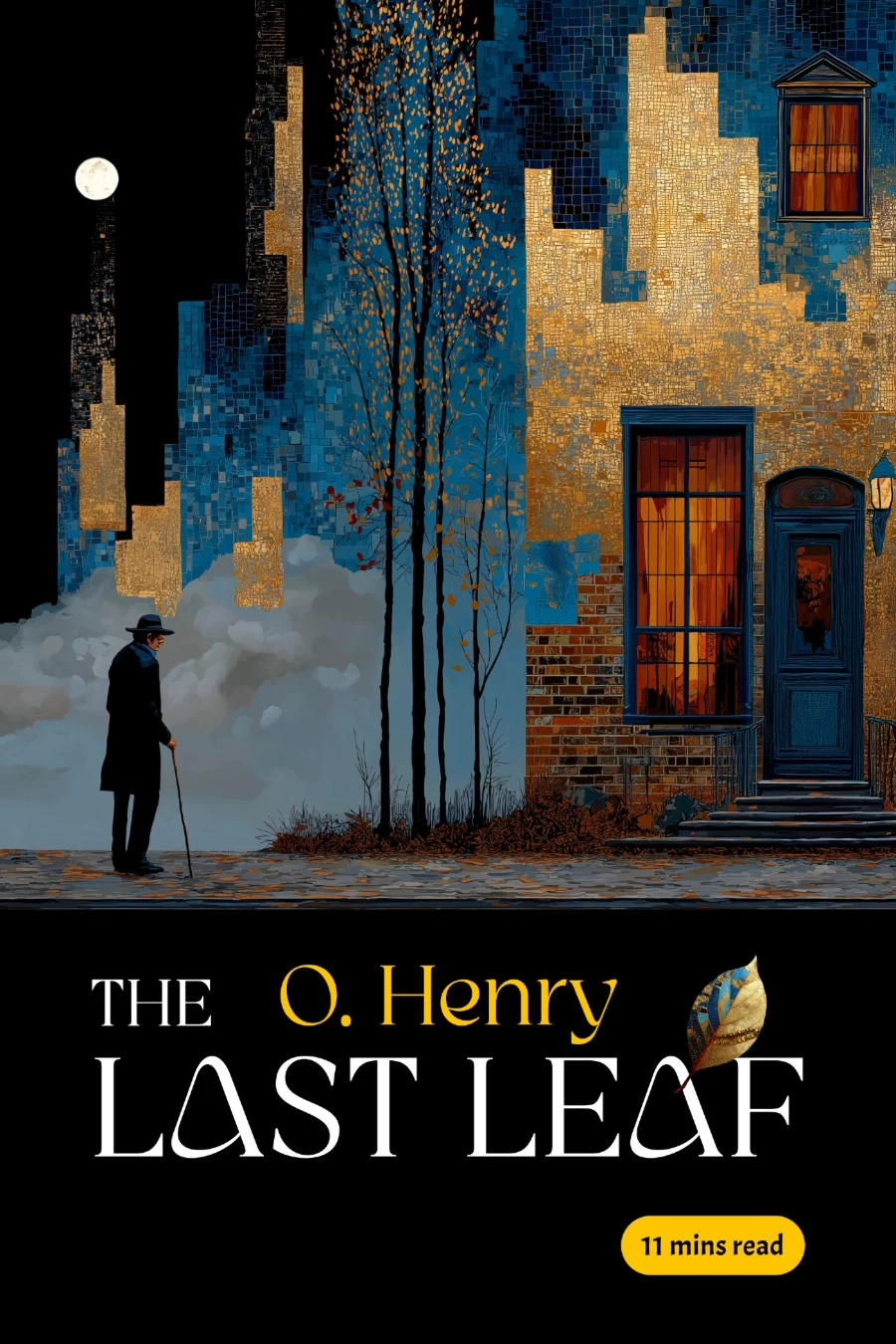
The Last Leaf is a short story by O. Henry, first published in 1907 as part of his collection "The Trimmed Lamp and Other Stories." Set in New York City's Greenwich Village, the narrative follows two young artist women, Sue and Johnsy, who share a studio apartment. When Johnsy falls ill with pneumonia during a November outbreak, she becomes convinced that she will die when the last leaf falls from an ivy vine outside her window. As she watches the leaves drop one by one in the autumn wind, her will to live diminishes with each falling leaf. Sue desperately tries to encourage her friend while seeking help from their eccentric downstairs neighbor, an aging and unsuccessful painter named Behrman who has always dreamed of creating a masterpiece.
The story explores profound themes of self-sacrifice, the power of hope, and the redemptive nature of art. O. Henry masterfully weaves together the fragility of life with the strength of human compassion, as the curmudgeonly Behrman makes an ultimate sacrifice to save Johnsy's life. The twist ending, characteristic of O. Henry's storytelling style, reveals an act of heroism that transforms what seemed like a natural miracle into a deliberate artistic creation. The lone surviving leaf on the vine becomes a symbol of perseverance and the life-giving power of beauty and illusion.
The Last Leaf remains one of O. Henry's most celebrated works and continues to be widely anthologized in literature textbooks and collections. Its exploration of artistic community in early 20th-century Greenwich Village provides a glimpse into bohemian life and the struggles of aspiring artists. The story's enduring appeal lies in its economical prose, emotional depth, and the poignant message that true artistry sometimes manifests not in fame or recognition but in quiet acts of love and sacrifice. It stands as a testament to O. Henry's ability to find profound meaning in ordinary lives and his skill at crafting narratives that surprise readers while touching their hearts.