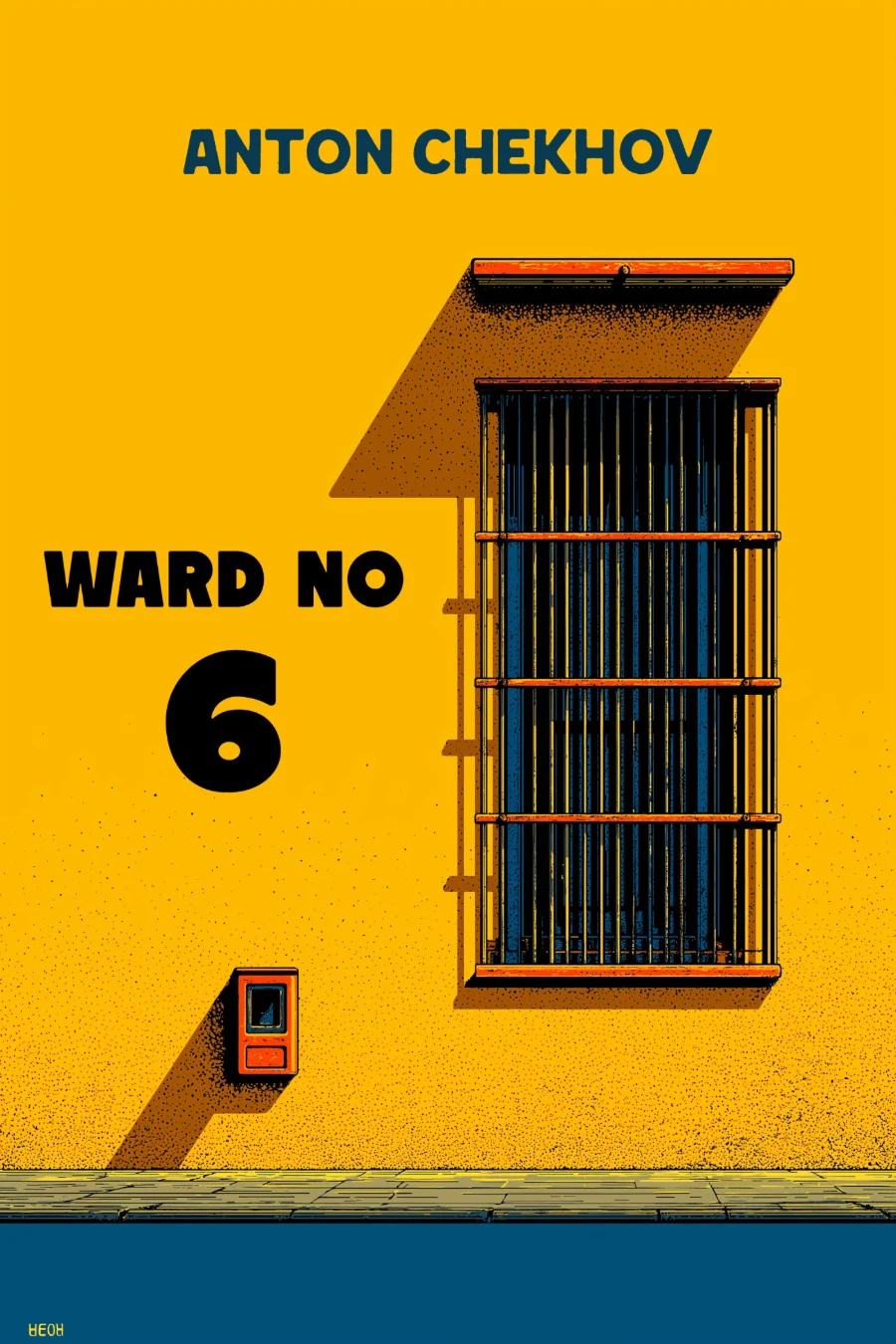
Ward No. 6
1h 48m
21,540 words
en
In a remote provincial hospital stands a dilapidated annex housing five mental patients and their indifferent watchman. The ward reeks of neglect—its windows are barred, its patients forgotten by the world outside. Into this dismal setting steps Dr. Andrei Ragin, the hospital's chief physician, a man who has spent years performing his duties with weary detachment. When he begins visiting Ward No. 6 to converse with one of its inmates—a paranoid former court official named Ivan Gromov who possesses a sharp intellect and fierce convictions—the doctor finds himself drawn into philosophical discussions that challenge his longstanding principles of stoic resignation and non-resistance to life's injustices.
Chekhov constructs a merciless examination of complicity, examining how intelligent people rationalize their inaction in the face of suffering. The story unfolds with the author's characteristic restraint, allowing the horror of the situation to emerge not through melodrama but through accumulating details: the filthy conditions, the casual brutality of the watchman, the townspeople's gossip, and most devastatingly, the way educated society accepts such degradation as inevitable. The conversations between doctor and patient become a battle between abstract philosophy and lived reality, between the comfort of detachment and the anguish of awareness. As their meetings continue, the boundaries between sanity and madness, between keeper and kept, begin to blur in ways that expose the arbitrary nature of power and the fragility of social position.
This novella endures because it asks uncomfortable questions about moral responsibility and the seductive appeal of intellectual passivity. It rewards readers willing to sit with discomfort, those interested in how systems of institutionalized cruelty perpetuate themselves through the apathy of good people, and anyone drawn to psychological fiction that probes the consequences of confronting truths we've spent our lives avoiding.
Russian RealismPsychiatric InstitutionsExistential DespairPhilosophical DialogueSocial CritiqueMental IllnessIntellectual IsolationMoral ApathyProvincial LifeDeterminism vs Free WillIrony and TragedyMedical Ethics
PublisherKafka
LanguageEnglish
Source
short-fiction-anton-chekhov