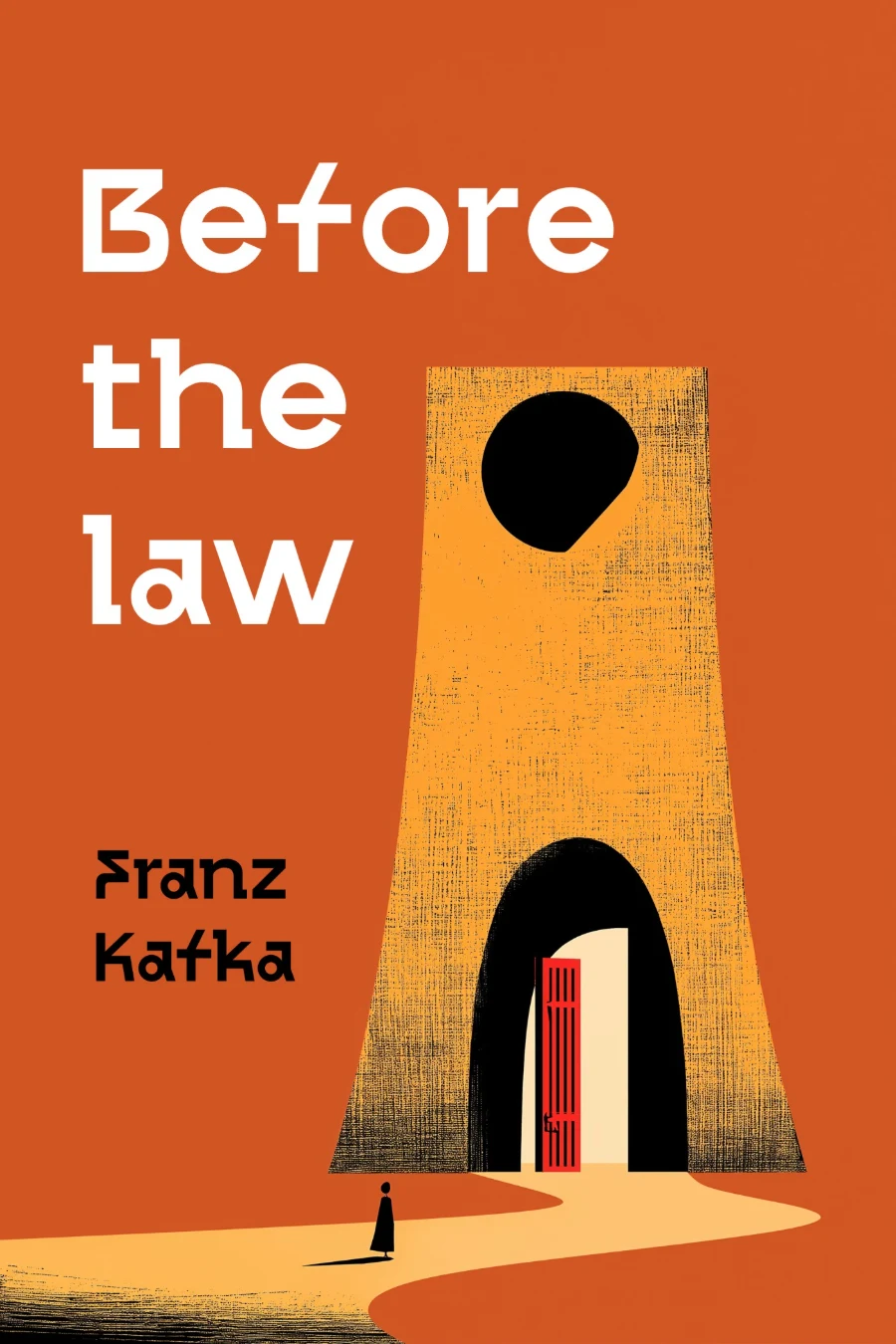
Before the Law
Translated by Ian Johnston
4 min
645 words
en
A man approaches a gateway that promises access to the Law itself, but finds his path blocked by a gatekeeper who tells him he cannot enter at this particular moment—though perhaps later. The traveler, who has come from the country expecting admission, must decide whether to wait, to force his way through, or to turn back. He chooses to wait. What begins as a temporary delay stretches into something far more profound, as the question of when—or whether—he will be granted entry becomes the defining struggle of his existence.
Kafka constructs this parable with the precision of a theological riddle, building an entire metaphysical architecture from the simplest elements: a door, a keeper, a supplicant. The texture is spare yet ceremonial, almost biblical in its gravity, while the logic operates according to dream rules where everything feels simultaneously absurd and urgently meaningful. The power dynamics between the man and the gatekeeper shift subtly as years accumulate, creating a relationship that is part bureaucratic obstruction, part master-student dynamic, part psychological imprisonment. Every detail—the gatekeeper's fur coat, the fleas in his collar, the man's dwindling possessions—carries allegorical weight without ever settling into neat interpretation.
This brief work, often published as part of Kafka's larger body of short fiction and parables, has become foundational to understanding modern alienation, institutional power, and the nature of seeking. It rewards readers who appreciate literature that operates on multiple registers simultaneously—as social commentary, spiritual inquiry, and psychological portrait—while refusing to provide comfortable answers. The story's ambiguity is not evasive but essential, inviting endless contemplation about authority, free will, and what we surrender in our pursuit of legitimacy or transcendence.
PublisherKafka
LanguageEnglish
Source
short-stories-franz-kafka