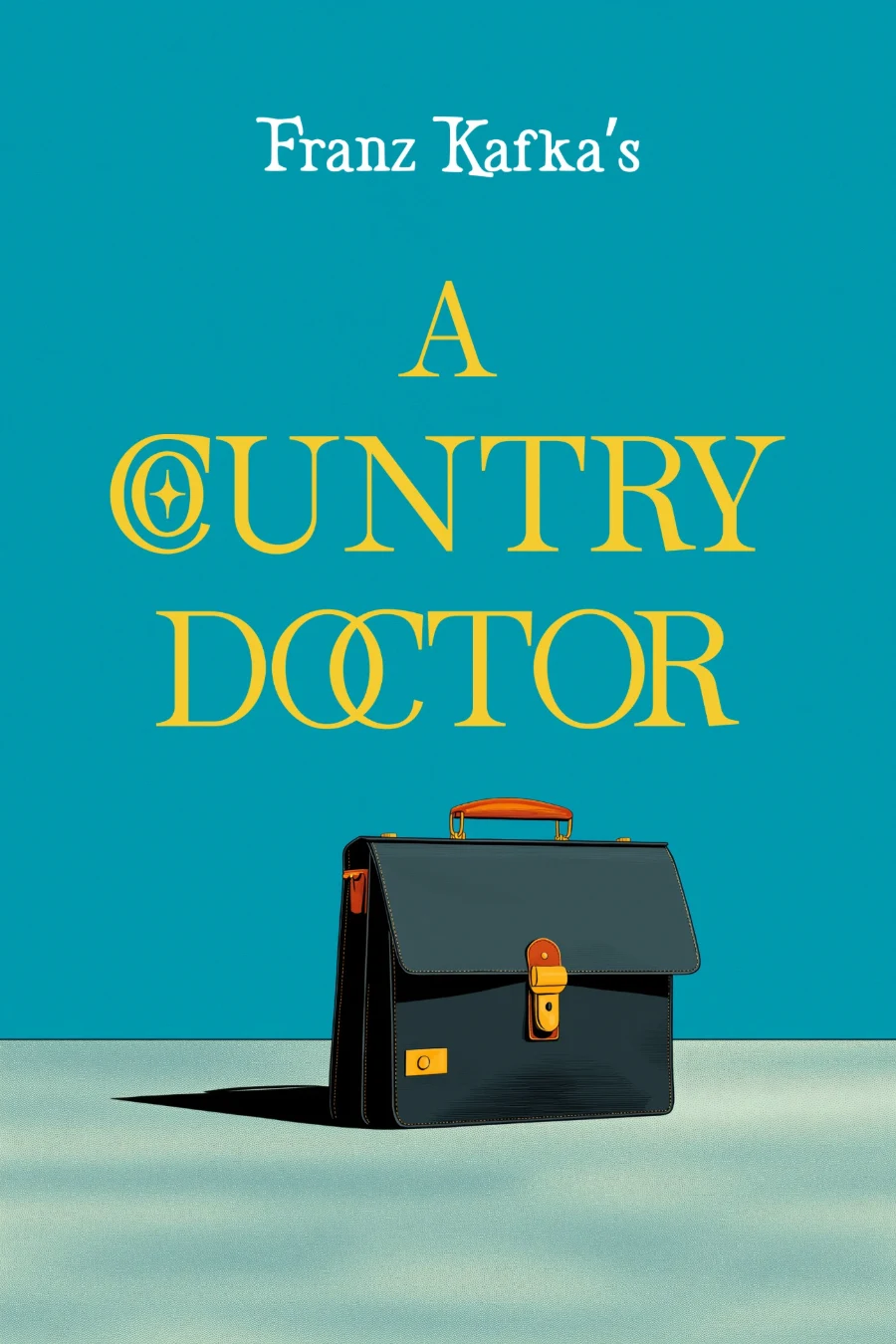
A Country Doctor
Translated by Ian Johnston
In the middle of a severe blizzard, a rural physician is called to the bedside of a dying boy. His own horse has died in the cold. When a stranger and two enormous horses crawl out of the doctor’s disused pigsty, his transport is secured—but the carriage departs instantly, tearing the doctor away as the stranger kicks in a door to reach the servant, Rosa.
At the patient's home, the physical world warps. The doctor examines a gaping, worm-infested wound he cannot close. The boy's family, demanding a miracle, strips the physician of his clothes and forces him into the sickbed, trapping the old man in a room where medical science and professional duty have lost all power.
Published in 1919, the story collapses the mechanics of a nineteenth-century medical drama into an expressionist nightmare of isolation and existential panic. Translated by Ian Johnston.