In the Penal Colony
Translated by Ian Johnston
59 min
11,774 words
ende
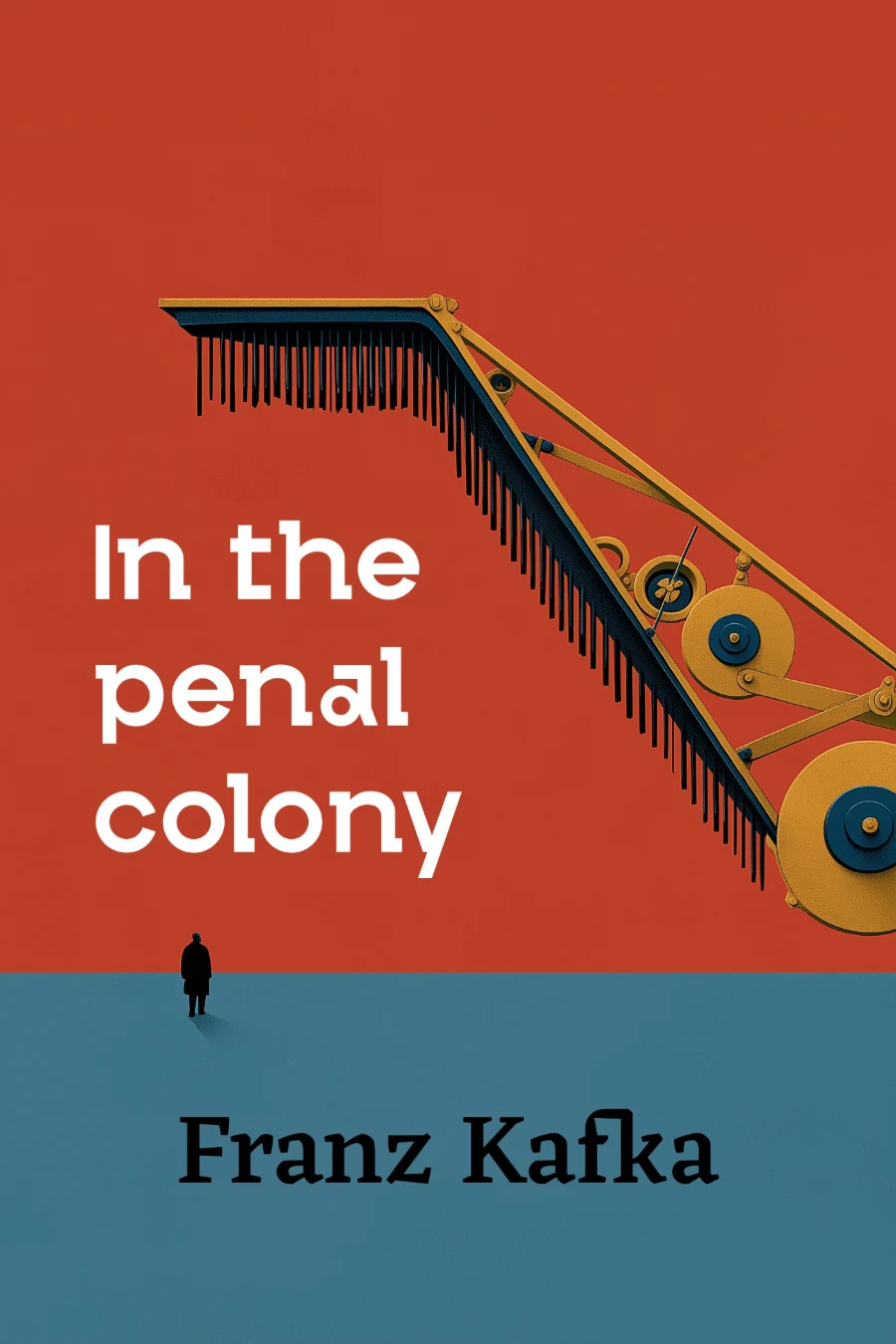
An explorer arrives at a remote penal colony to observe a peculiar apparatus of execution. He is greeted by an officer who serves as both operator and fervent believer in the machine's purpose—a device designed not merely to kill, but to inscribe the sentence of the condemned directly onto the body through an elaborate process of mechanized torture. The condemned man, ignorant of his sentence and unable to understand the language of his captors, stands nearby as the officer prepares an elaborate demonstration of this instrument of justice.
Kafka constructs a nightmare of bureaucratic devotion and technological worship, where the officer's enthusiasm for his machine borders on religious ecstasy. The story unfolds almost entirely through the officer's detailed explanation of how the apparatus functions, its history under the previous Commandant, and its uncertain future under new leadership. What begins as a grotesque curiosity transforms into something more unsettling: a meditation on the nature of punishment, the seductive appeal of absolute systems, and the human capacity to find meaning in cruelty. The colonial setting adds another layer of violence, where questions of civilization and barbarism become hopelessly tangled. The machine itself becomes a character—intricate, beautiful in its precision, and utterly monstrous in its purpose.
This brief work endures because it captures something essential about institutional violence and the way elaborate systems can become divorced from human meaning. Kafka renders the absurd with clinical precision, never explaining away the horror or offering comfortable moral clarity. The story rewards readers willing to sit with discomfort, those who recognize that the most disturbing fictions often illuminate the mechanisms of power we prefer not to examine too closely. Its compact length belies its capacity to unsettle long after the final page.
PublisherKafka
LanguageEnglish, German
Source
short-stories-franz-kafka