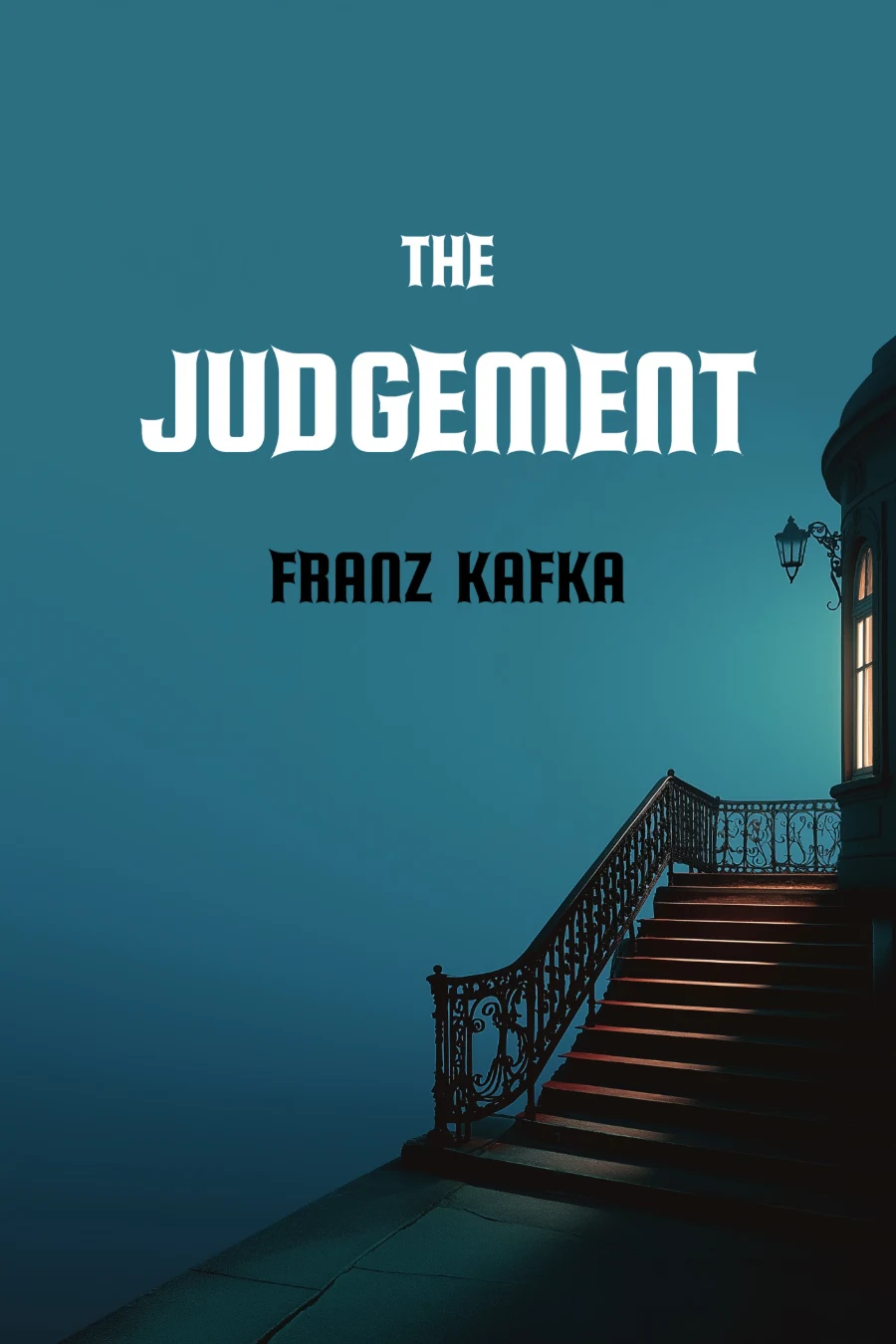
The Judgment
Translated by Ian Johnston
23 min
4,462 words
ende
A young businessman sits in his room on a Sunday morning, having just written a letter to a distant friend about his recent engagement. Georg Bendemann appears to have everything in order: a thriving business he's helped build, a respectable fiancée, an aging father upstairs. Yet as he moves from his writing desk to his father's darkened room to discuss this letter, something begins to shift beneath the surface of this ordinary domestic scene. What starts as a dutiful visit becomes an increasingly unsettling conversation about memory, truth, and the nature of their relationship.
Kafka compresses an entire universe of psychological tension into this brief encounter between father and son. The story operates like a nightmare that follows its own inexorable logic—each exchange between the two men peels back another layer of certainty, until the comfortable assumptions of the opening pages seem impossibly distant. The prose is deceptively simple and direct, yet it creates an atmosphere of mounting dread where every gesture and statement carries hidden weight. The father's room itself transforms from merely dim and neglected into something more oppressive, a space where ordinary filial concern curdles into something far more complex and disturbing.
This story rewards readers willing to sit with ambiguity and psychological strangeness. Written in a single night in 1912, it captures Kafka's particular genius for depicting relationships where power and vulnerability shift unpredictably, where love and cruelty become indistinguishable, and where the solid ground of daily life can suddenly give way. Those drawn to fiction that explores the uncanny dynamics of family, the fragility of self-certainty, or the way language itself can become a trap will find themselves returning to this story's claustrophobic intensity again and again.
PublisherKafka
LanguageEnglish, German
Source
short-stories-franz-kafka