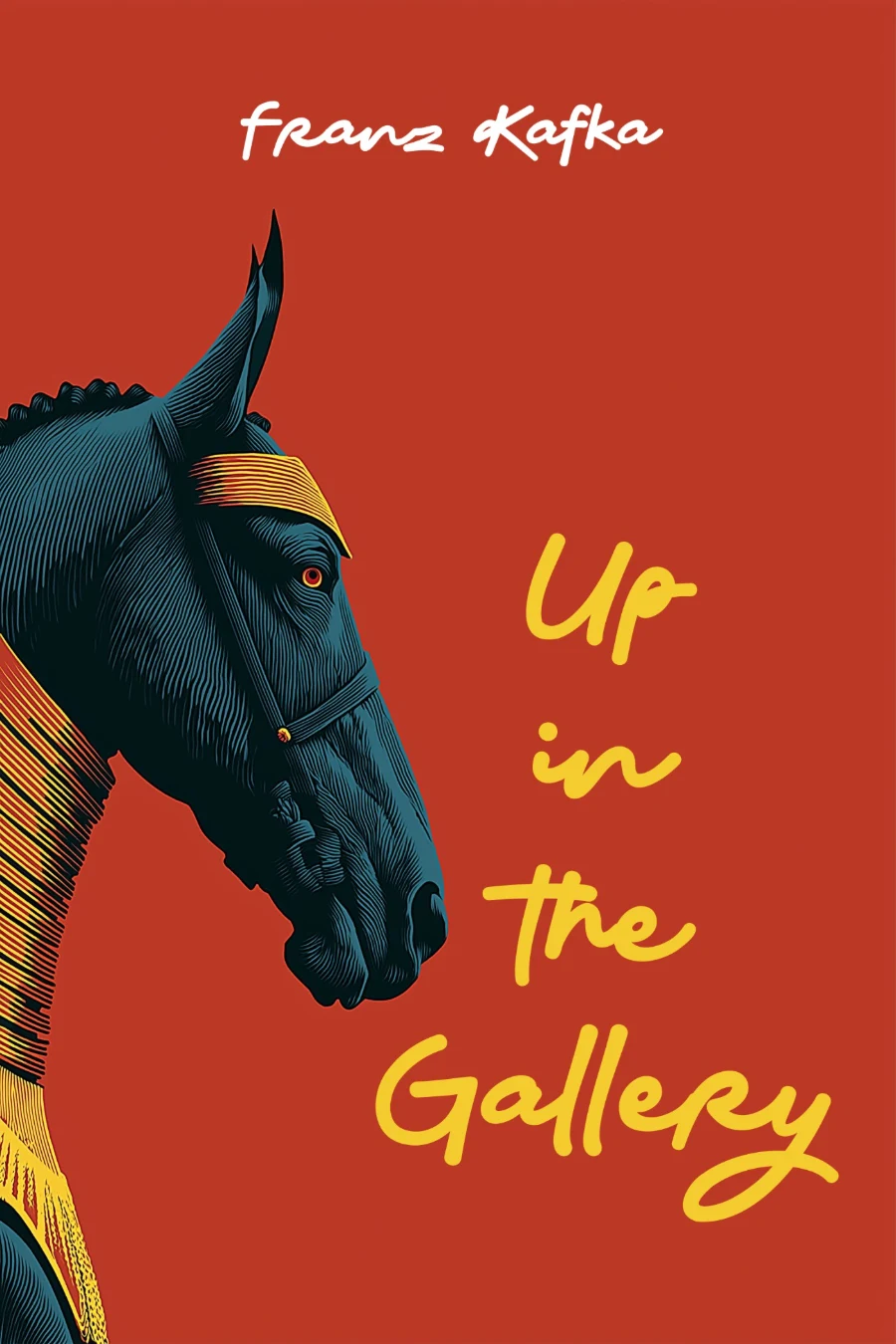
Up in the Gallery
Translated by Ian Johnston
A young man sits in the circus gallery, watching a performance unfold below. From his elevated vantage point, he observes a rider—a woman on horseback who circles the ring under the direction of a ruthless ringmaster, performing night after night for months on end without respite. The scene presents itself twice: first as a vision of exploitation and exhaustion that moves the observer to tears, then as a spectacle of grace and beauty that ends in applause.
In just two brief paragraphs—this is one of Kafka's shortest works—the story creates a dizzying architectural structure that questions the nature of perception itself. The prose shifts suddenly and dramatically between two versions of reality, leaving the reader suspended between what might be happening and what appears to be happening. Kafka constructs the piece as a grammatical labyrinth, with the first paragraph spiraling through a single, breathless conditional sentence that never quite completes its thought, building clause upon clause until the syntax itself seems to buckle under the weight of imagined suffering. The second paragraph arrives with shocking brevity and certainty, presenting an entirely different scene in language that is straightforward and untroubled.
This miniature work distills Kafka's essential preoccupations: the gap between inner experience and outer appearance, the impossible position of the witness who cannot act, and the way social performances conceal or reveal truth. It rewards readers who appreciate formal experimentation and psychological ambiguity, those willing to sit with uncertainty and contradiction. The story offers no resolution, only the vertiginous experience of occupying two incompatible realities at once, of never knowing which version to trust—or whether the distinction even matters.