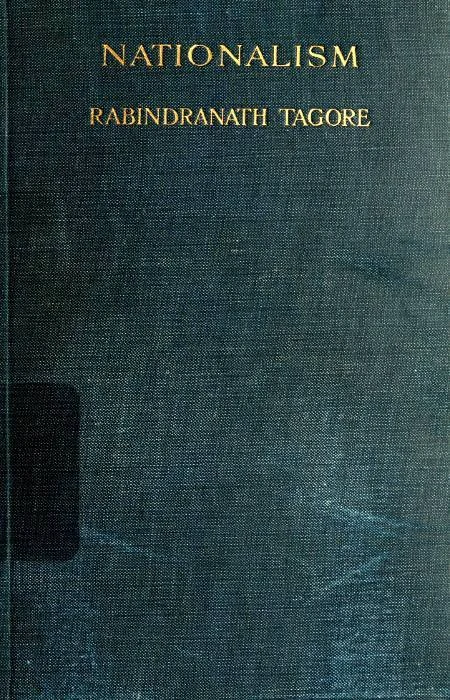
Nationalism
Three lectures, delivered between 1916 and 1917 in Japan and the United States, in the middle of the most expensive war humanity had yet attempted. Tagore had just won the Nobel Prize; he was being courted by political movements in three continents. He used his platform to say the thing that almost nobody wanted to hear: that the modern nation-state, the engine of progress as it was then understood, was a mechanism for sacrificing human beings to the demands of an abstraction.
Tagore's argument cuts across the comfortable allegiances of both East and West. He refuses to flatter Indian readers with anti-colonial rhetoric. He refuses to flatter Japanese readers by celebrating the Meiji modernisation that had just demonstrated its capability by annexing Korea. He refuses to flatter Western readers by promising that Asia would catch up. What he offers instead is a sustained meditation on what the political form of the nation actually costs in spiritual life — the substitution of the patriot's pride for the householder's care, the dressing-up of commercial greed in moral language, the steady mechanisation of consciousness itself.
The lectures close with a long poem in which Tagore's vision of an alternative — a humanism grounded in personal sovereignty rather than collective fury — is set against the funeral pyre of the European century. The book was received coldly at the time. A hundred years later, with the nation-state still doing what Tagore said it would, the prose reads as one of the most prescient essays of the twentieth century.