Kafka
Kafka
Download AppDownload
AboutContactPrivacyTerms
Download App

© 2026 Kafka

  1. Home
  2. /
  3. Why Men Fight
Why Men Fight

Why Men Fight

Bertrand Russell

4h 37m
55,390 words
en
Start Reading

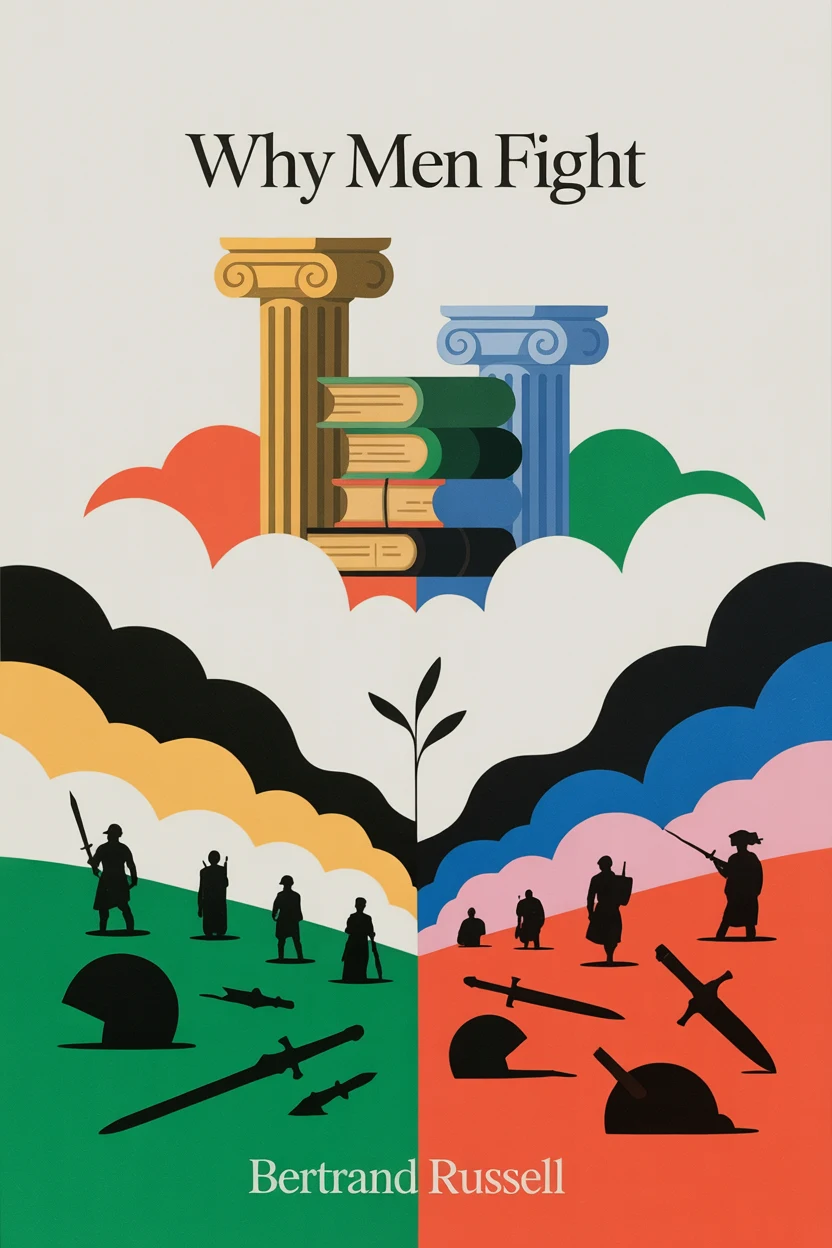
Why Men Fight, published in 1916 during the height of World War I, is Bertrand Russell's profound philosophical examination of human conflict, social organization, and the possibilities for lasting peace. Originally titled Principles of Social Reconstruction in Britain, this work emerged from Russell's pacifist convictions and his opposition to the Great War, which had cost him his lectureship at Trinity College, Cambridge. The book explores fundamental questions about why societies engage in destructive conflicts and what psychological, economic, and political forces drive individuals and nations toward violence rather than cooperation.

Russell structures his analysis around key social institutions including the state, property, marriage, education, religion, and war itself. He argues that many human conflicts arise from possessiveness and the desire to control others, whether through economic domination, political power, or social conformment. Rather than viewing human nature as inherently violent, Russell contends that social structures and institutions channel natural human impulses in destructive directions. He advocates for what he calls creative impulses over possessive ones, arguing that society should be reorganized to foster individual growth, genuine education, and meaningful work rather than competition and acquisition. His vision includes economic reform, educational transformation that respects individual development, and political structures that allow for greater personal freedom while maintaining social cohesion.

The historical significance of Why Men Fight lies in its bold challenge to wartime nationalism and its ambitious attempt to envision alternatives to the destructive social order of early 20th-century Europe. Russell's pacifist stance, articulated while his country was at war, demonstrated remarkable moral courage and intellectual independence. The book influenced progressive thought on education, peace movements, and social reform throughout the 20th century. Today, it remains relevant for its penetrating analysis of how institutions shape human behavior and its insistence that peace requires not merely the absence of war but fundamental changes in how societies are organized, how children are educated, and how individuals relate to power and authority.
PhilosophyPolitical PhilosophyPacifismWorld War ISocial CriticismEthicsWar and Peace20th CenturyNon-FictionPolitical TheoryHuman NatureSocial ReformAnti-war LiteratureAnalytical PhilosophyBritish Philosophy
PublisherKafka
LanguageEnglish
Source
Wikisource

Books by Bertrand Russell

In Praise of IdlenessIn Praise of Idleness
Roads to FreedomRoads to Freedom
The Problems of PhilosophyThe Problems of Philosophy
The Practice and Theory of BolshevismThe Practice and Theory of Bolshevism

Audiobooks by Bertrand Russell

Problems of PhilosophyProblems of Philosophy
ABC of AtomsABC of Atoms
Icarus; or, The Future of ScienceIcarus; or, The Future of Science
PhilosophyPhilosophy
What I BelieveWhat I Believe
ABC of RelativityABC of Relativity
Philosophy of Logical AtomismPhilosophy of Logical Atomism
Our Knowledge of the External World: As a Field for Scientific Method in PhilosophyOur Knowledge of the External World: As a Field for Scientific Method in Philosophy
Introduction to Mathematical PhilosophyIntroduction to Mathematical Philosophy
Proposed Roads to FreedomProposed Roads to Freedom
Philosophical EssaysPhilosophical Essays
Problems of Philosophy (version 2)Problems of Philosophy (version 2)
Analysis of MindAnalysis of Mind
On Propositions: What They Are and How They MeanOn Propositions: What They Are and How They Mean
Mysticism and Logic and Other EssaysMysticism and Logic and Other Essays
Political IdealsPolitical Ideals
Practice and Theory of BolshevismPractice and Theory of Bolshevism
Problem of ChinaProblem of China

Similar books

Perpetual PeacePerpetual Peace
CritoCrito
ClerambaultClerambault
Death in VeniceDeath in Venice
ApologyApology
The Great ImpersonationThe Great Impersonation
Counsels and MaximsCounsels and Maxims
PhaedoPhaedo
PhaedrusPhaedrus
Short FictionShort Fiction
Bushido: The Soul of JapanBushido: The Soul of Japan
Critique of Pure ReasonCritique of Pure Reason
Dangerous AgesDangerous Ages
ParmenidesParmenides
TimaeusTimaeus
CategoriesCategories
Democracy and EducationDemocracy and Education
Talks to Teachers on PsychologyTalks to Teachers on Psychology

Similar audiobooks

Beyond Good and EvilBeyond Good and Evil
Alcibiades IAlcibiades I
Life of Charles DickensLife of Charles Dickens
Lives of the Twelve CaesarsLives of the Twelve Caesars
History of England, from the Accession of James II - (Volume 1, Chapter 05)History of England, from the Accession of James II - (Volume 1, Chapter 05)
Night LandNight Land