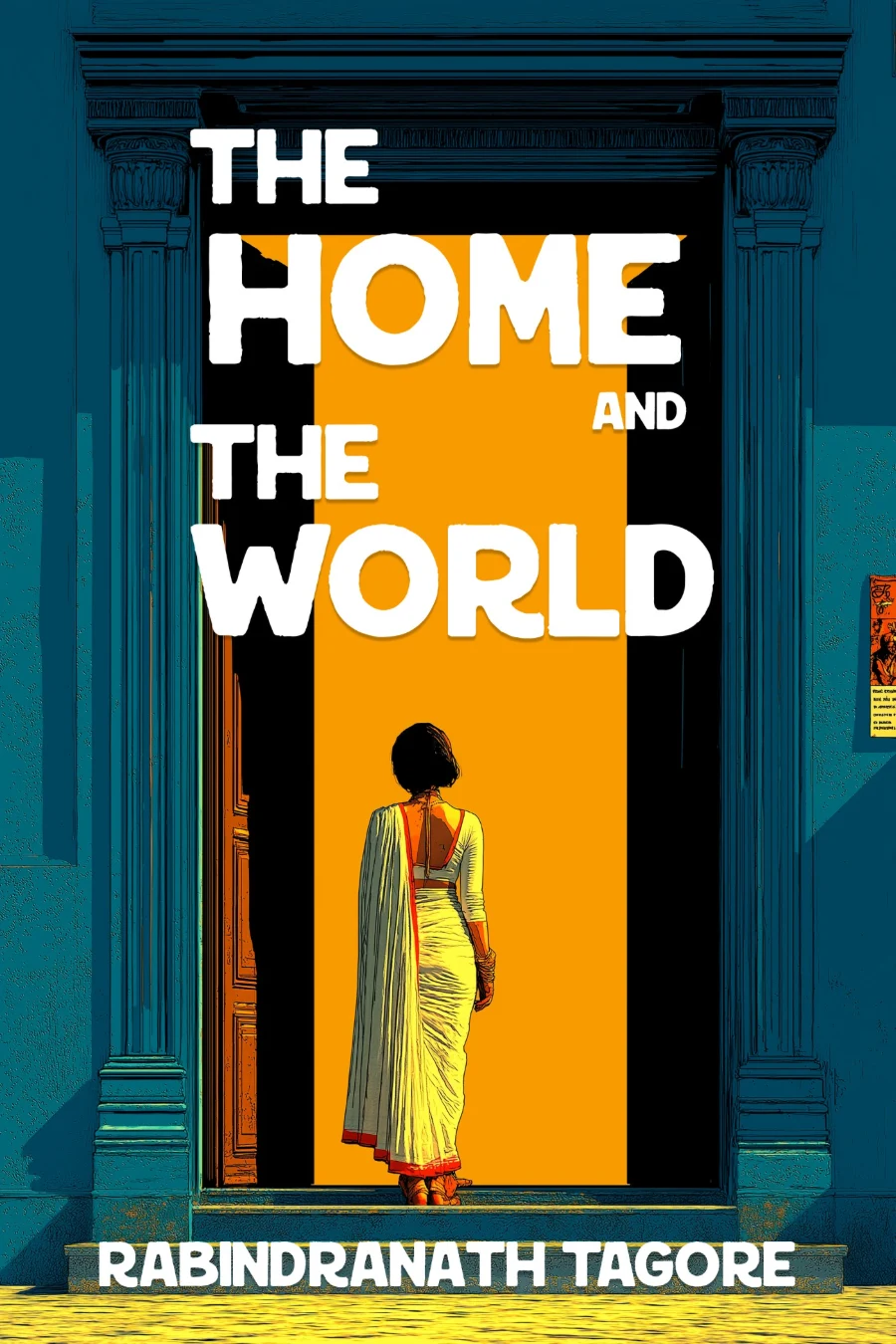
The Home and the World
Translated by Surendranath Tagore
5h 37m
67,332 words
en
In early twentieth-century Bengal, as the Swadeshi movement calls for Indians to reject British goods and embrace self-reliance, a privileged household becomes a microcosm of a nation in turmoil. Bimala has lived contentedly within the安全 confines of her home, devoted to her husband Nikhil, a wealthy zamindar whose modern, rational mind champions individual freedom and gradual reform. When Nikhil's charismatic friend Sandip arrives, preaching passionate nationalism and the absolute duty to country, he draws Bimala out of her domestic sphere and into the intoxicating world of political awakening. What begins as an intellectual and emotional education becomes a test of loyalties—between tradition and modernity, between the private bonds of marriage and the public demands of patriotism, between two men who represent opposing visions of India's future.
Tagore structures the novel as a trio of confessional voices, allowing Bimala, Nikhil, and Sandip to each narrate their perspectives in turn. This technique reveals not just different viewpoints but different modes of self-deception and self-discovery. Bimala's chapters pulse with the confusion of someone learning to see herself as a political being, while Nikhil's reflections carry the melancholy of a man who believes in principles even when they threaten his happiness. Sandip's sections crackle with rhetoric and self-regard, his revolutionary fervor inseparable from his personal vanity. The novel refuses easy answers about nationalism itself, treating it as both genuinely stirring and potentially destructive, capable of liberating individuals and manipulating them in equal measure.
The claustrophobic intensity of this triangle—played out in drawing rooms, gardens, and through feverish internal monologues—gives the political deeply personal stakes. Tagore wrote this during a period when he was questioning the methods and costs of aggressive nationalism, and his skepticism infuses every page without diminishing the genuine passion of those caught up in the movement. The novel rewards readers willing to sit with ambiguity, those interested in how grand historical forces infiltrate the most intimate corners of human relationships, and anyone curious about the psychological complexity of political commitment when it collides with love, marriage, and competing visions of what freedom actually means.