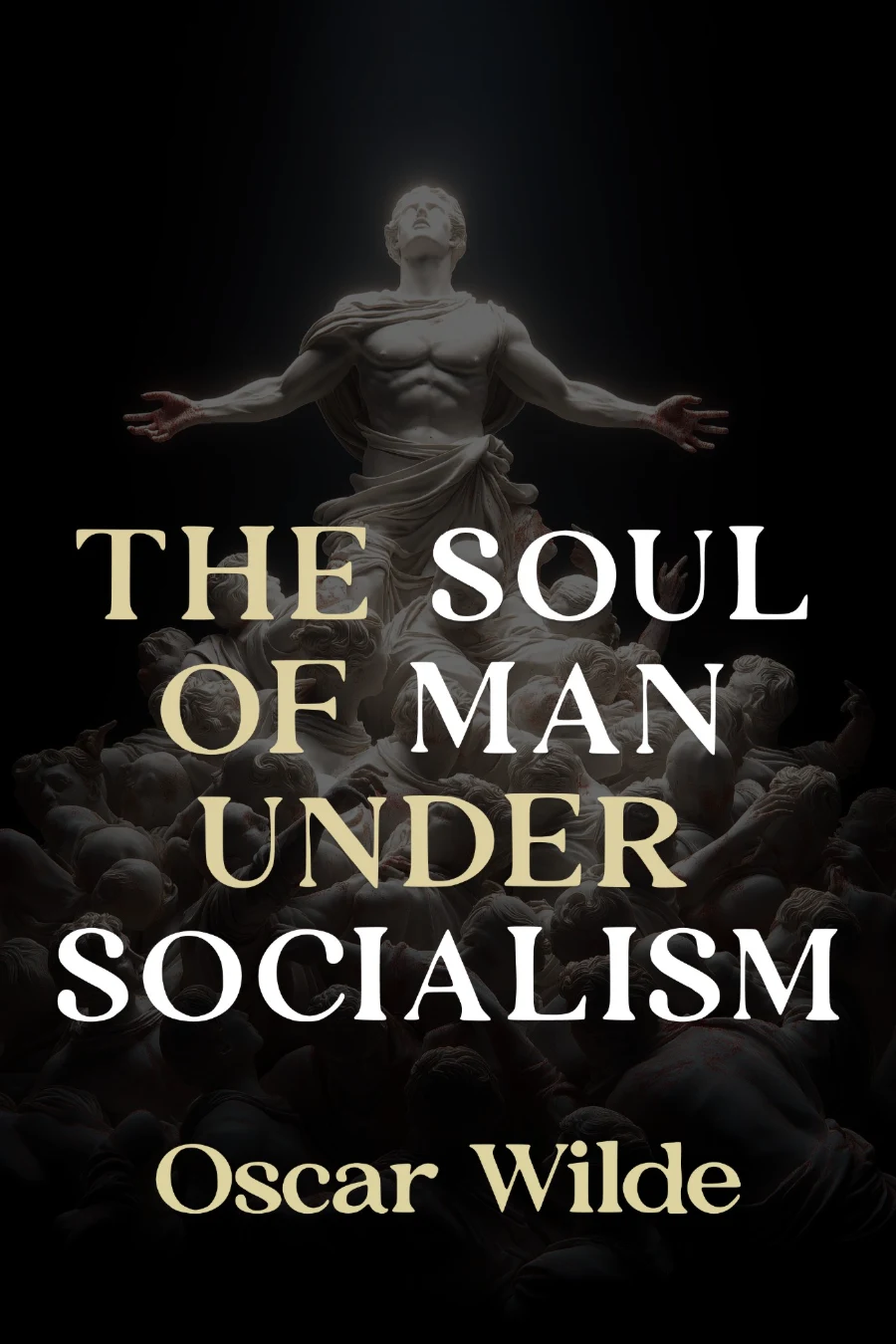
The Soul of Man under Socialism
The Soul of Man under Socialism is Oscar Wilde's only major political essay, published in 1891, in which the renowned playwright and wit presents a provocative vision of an ideal society freed from the constraints of private property and authoritarian control. Rather than advocating for state socialism or collective ownership in the traditional sense, Wilde argues for a form of individualistic socialism that would liberate human creativity and allow each person to develop their authentic self without the degrading pressures of poverty or the corrupting influence of wealth. He contends that private property crushes individualism by forcing the poor into survival mode and the rich into the shallow pursuit of accumulation, while true socialism would eliminate these economic concerns and permit everyone to pursue artistic, intellectual, and personal fulfillment.
Wilde's essay is remarkable for its rejection of both capitalism and authoritarian collectivism, proposing instead that the goal of socialism should be the cultivation of individual personality rather than conformity to state mandates. He attacks charity as a band-aid solution that perpetuates inequality, criticizes the way society punishes nonconformity, and celebrates disobedience as a virtue when laws or customs restrict human development. His vision embraces technological progress and machine labor as means to free humans from drudgery, allowing them to become artists and thinkers. He also argues that in a truly liberated society, there would be no need for marriage laws, property disputes, or the apparatus of punishment that currently exists.
The essay holds significant historical importance as it reveals the radical political dimension of one of Victorian literature's most celebrated figures, written during a period of intense social upheaval and labor movements across Europe. Its blend of anarchist, socialist, and aesthetic philosophy influenced later thinkers and remains relevant today in discussions about universal basic income, automation, creative freedom, and the relationship between economic systems and human flourishing. Wilde's elegant prose transforms what could have been a dry political tract into a passionate meditation on human potential, making it essential reading for understanding both Wilde's own philosophy and the broader intellectual ferment of the late nineteenth century.