Heer

Heer

Waris Shah

Translated by Charles Frederick Usborne

3h 50m
45,989 words
en

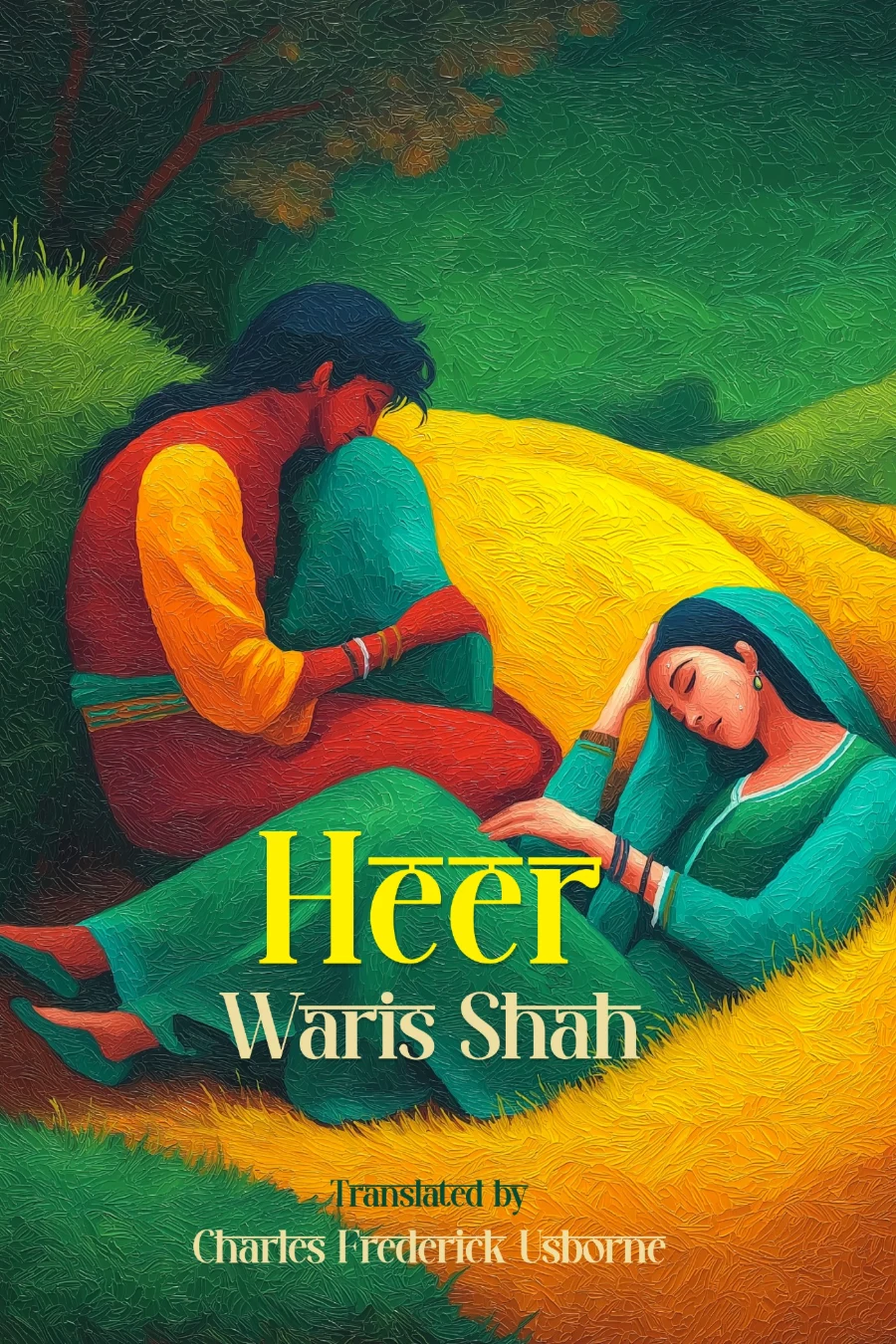
The Adventures of Heer and Ranjha, composed by the Punjabi Sufi poet Waris Shah in 1766, is a timeless tragic romance that has become one of the most celebrated works in Punjabi literature. The narrative follows Ranjha, a young man from the Ranjha clan who leaves his home after a family dispute over inheritance and wanders to the village of Jhang Siyal, where he encounters the beautiful Heer, daughter of a wealthy chief. Their meeting sparks an intense love affair that defies social conventions and family expectations. Ranjha becomes a cowherd in Heer's household, and their passionate romance flourishes until it is discovered by Heer's family, who forcibly separate the lovers and arrange her marriage to another man. The story traces their desperate attempts to reunite, involving intervention by local authorities and religious figures, ultimately culminating in tragedy when Heer is poisoned by her family to preserve their honor.

Waris Shah's rendition stands as the definitive version of this popular Punjabi folk tale, which existed in oral tradition before his masterful poetic treatment. Written in the Punjabi poetic form of baint, the work is infused with Sufi mystical symbolism, where the earthly love between Heer and Ranjha serves as an allegory for the soul's longing for divine union with God. The poem explores profound themes of love versus social duty, the rigidity of feudal and tribal structures, the corruption of religious and political authorities, and the ultimate transcendence of true love over worldly constraints. Shah's work brilliantly captures the cultural landscape of 18th-century Punjab while addressing universal human experiences.

The historical and cultural significance of this work cannot be overstated, as it remains deeply embedded in Punjabi consciousness across religious and national boundaries in both Pakistan and India. Waris Shah transformed a regional folk tale into a sophisticated literary masterpiece that has inspired countless adaptations in theater, film, music, and visual arts over the past two and a half centuries. The story of Heer and Ranjha has become synonymous with tragic romance in South Asian culture, comparable to Romeo and Juliet in Western literature, and continues to be recited, performed, and cherished as a foundational text of Punjabi identity and literary heritage.

PublisherFID4SA-Repository, Heidelberg University
LanguageEnglish
Source
FID4SA-Repository, Heidelberg University Library
CopyrightThis work is in the public domain. Originally published in 1903.