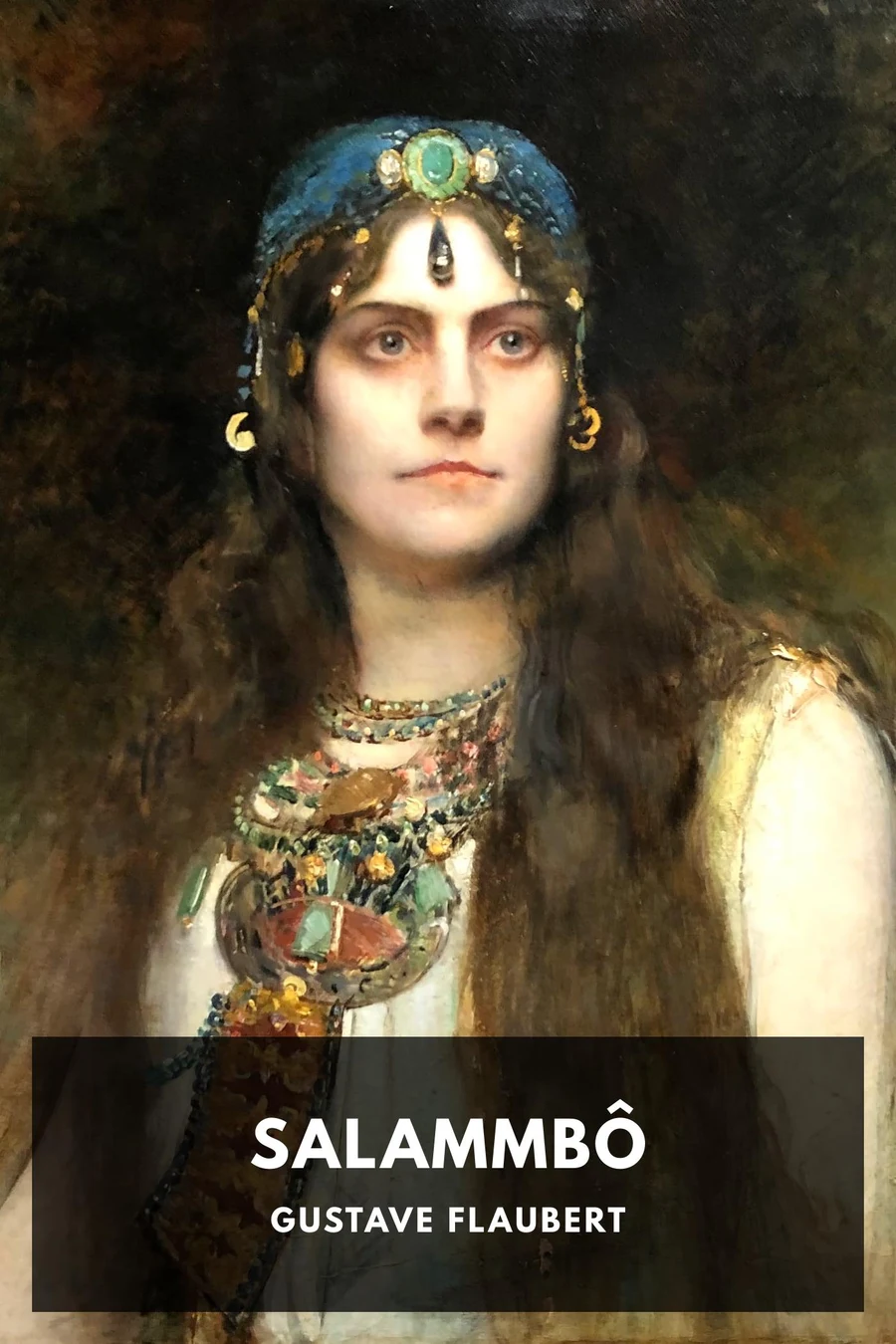
Salammbô
Translated by J.S. Chartres
Published in 1862, Salammbô was Flaubert’s deliberate flight from the provincial realism of Madame Bovary into the ancient world. Set in Carthage during the Mercenary Revolt that followed the First Punic War, the novel follows the doomed passion between Salammbô, daughter of the general Hamilcar Barca, and Mâtho, a Libyan mercenary who steals the sacred veil of the goddess Tanith. Flaubert spent years researching Carthaginian religion, warfare, and daily life, travelling to Tunisia to see the ruins himself. The result is a novel of hallucinatory intensity—siege warfare rendered in gorgeous prose, child sacrifice to Moloch described with clinical horror, and a love story that ends in public mutilation. It remains one of the great historical novels in any language, and a landmark of French literary style.