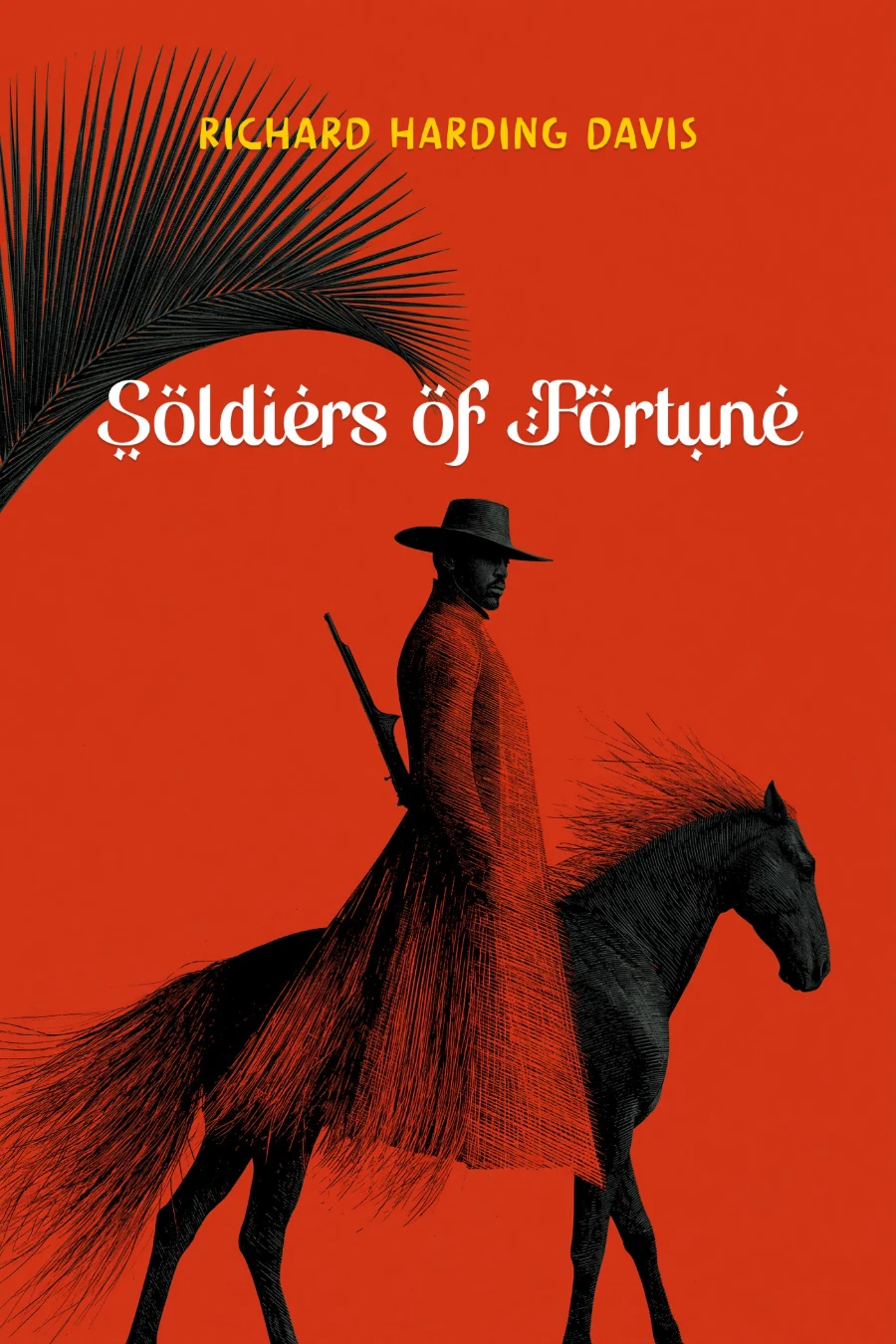
Soldiers of Fortune
6h 30m
77,870 words
en
Richard Harding Davis was the great American war correspondent of his generation — present at Cuba, South Africa, the Russo-Japanese War, the First World War — and the model for the kind of dashing reporter-hero Hemingway and his contemporaries grew up wanting to be. Soldiers of Fortune (1897), his most popular novel, distils that whole sensibility into one volume.
Robert Clay, an American mining engineer, runs a concession in the South American republic of Olancho. A revolution is brewing. The owner of the mine and his two daughters — one of them, Hope Langham, the most attractive heroine Davis ever wrote — arrive on the yacht. Within days Clay is fighting on the docks, plotting counter-coups in the President's palace, and trying to manage two romantic entanglements he didn't ask for. The pacing is propulsive; the dialogue is sharp; the politics are vintage 1890s American — Davis approves of Clay's interventions in Latin American affairs without apology.
What makes the book endure is Davis's clean prose and the central character's particular type of competence — the engineer who solves problems by knowing what materials are at hand and how they behave. Charles Dana Gibson illustrated the first edition. A 1919 silent film and a 1955 Errol Flynn version both adapted it; the book outlasted both.