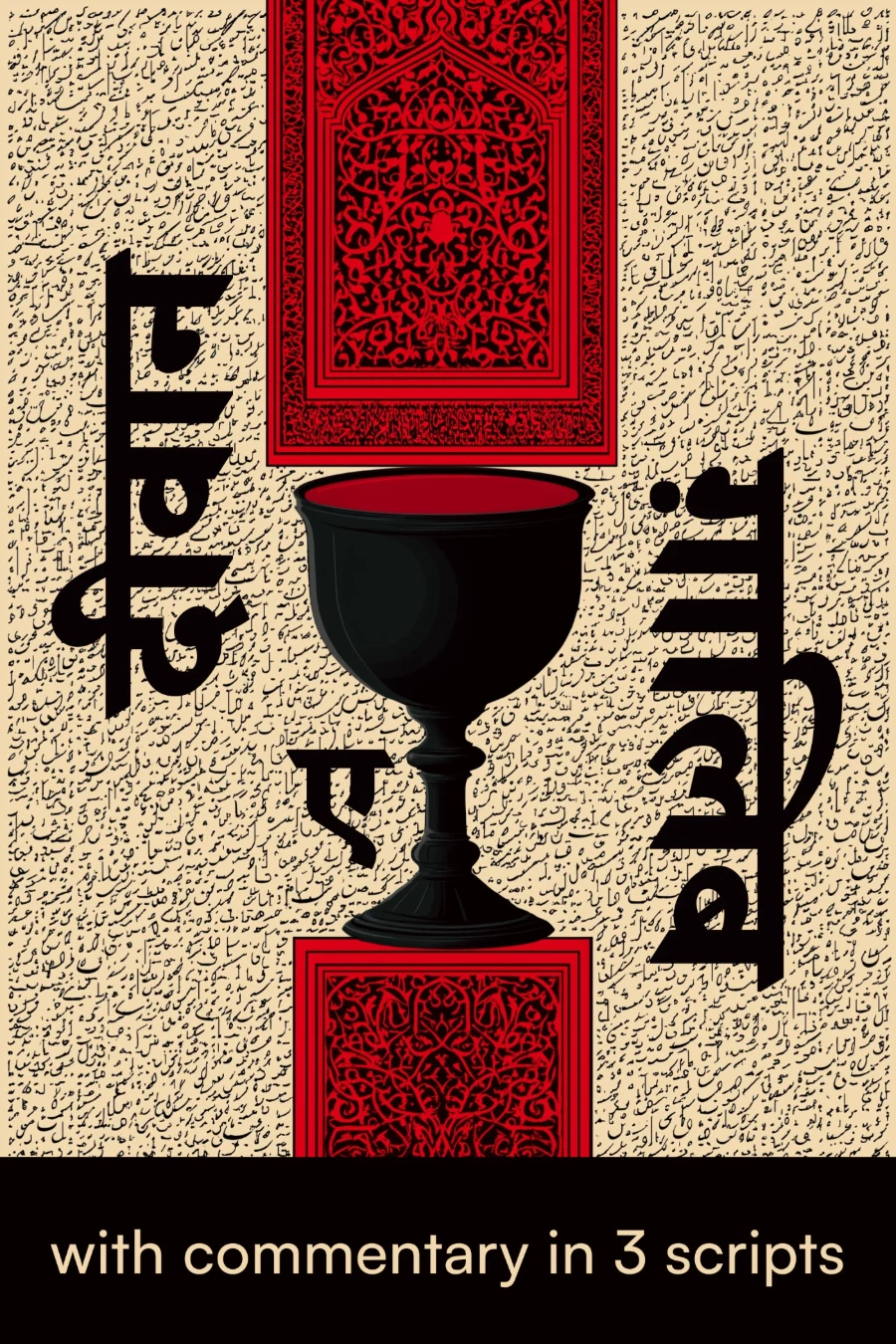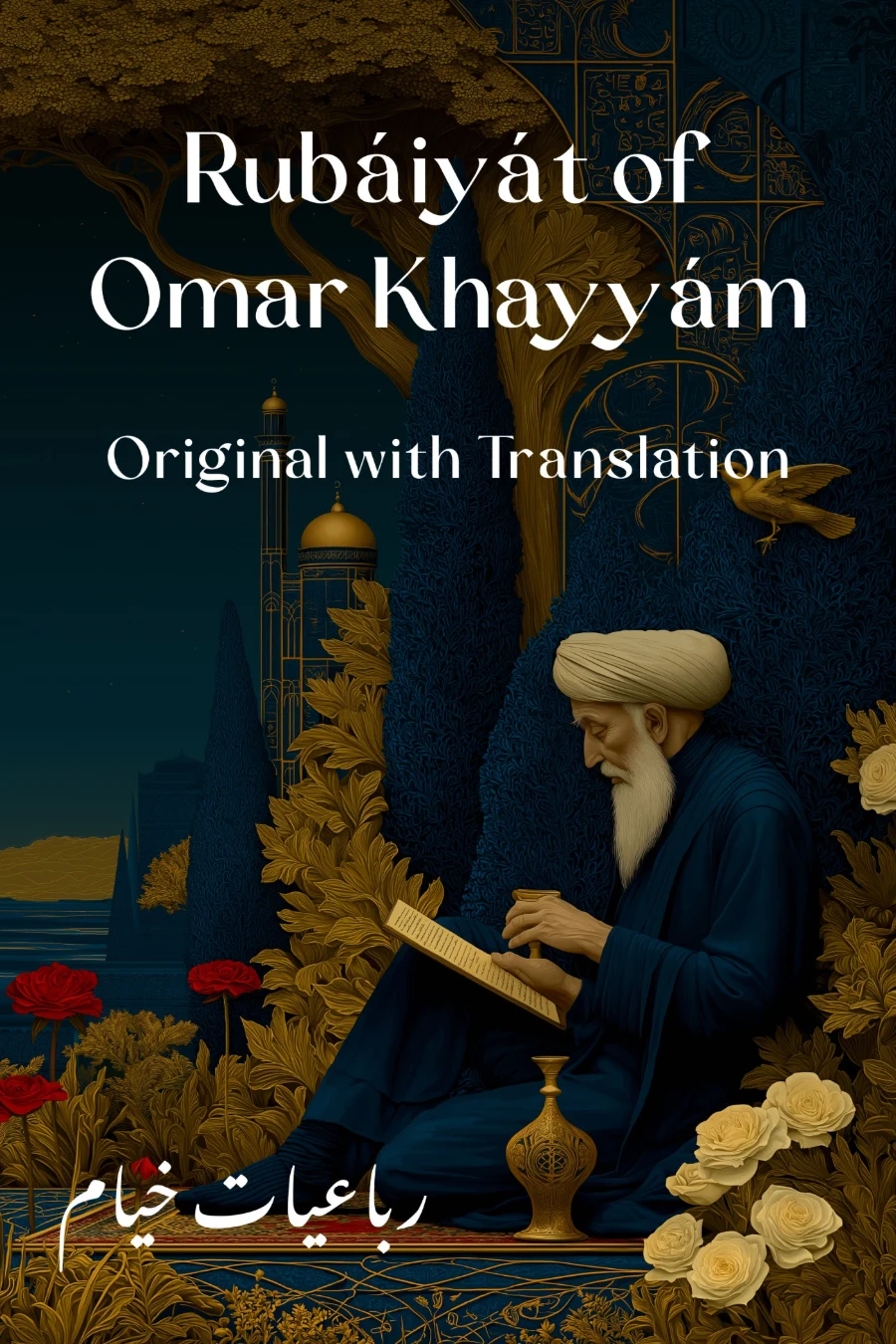
رباعیات خیام — Rubáiyát of Omar Khayyám
Translated by Edward FitzGerald, E. H. Whinfield
In the twilight between faith and doubt, pleasure and mortality, a Persian mathematician-poet raises a cup of wine and contemplates the fundamental mysteries that have haunted humanity across centuries. These quatrains—brief, self-contained verses that can be savored individually or contemplated as a whole—pose questions about fate, free will, the fleeting nature of earthly existence, and whether any divine order governs our brief time beneath the wheeling stars. The speaker moves through gardens and taverns, observing roses that bloom and wither in a day, considering the clay beneath his feet that might once have been a king or beloved, wondering whether paradise awaits or only dust.
What distinguishes this collection is its radical skepticism wrapped in sensuous imagery, its ability to make philosophical inquiry feel urgent and intimate rather than abstract. The verses oscillate between carpe diem celebrations of wine, love, and present-moment pleasure and darker meditations on the futility of human striving. There's a defiant quality to the hedonism here—not mere indulgence but a conscious rejection of religious asceticism and deferred rewards, a challenge to spend life questioning rather than accepting comfortable certainties. The imagery is tactile and immediate: the wine-cup, the rose garden, the dawn light, the potter's wheel—all grounding profound existential inquiry in the physical world. The tone shifts from playful irreverence to melancholic resignation, sometimes within a single quatrain, creating a complex emotional texture that resists easy categorization as either pessimistic or celebratory.
These verses have endured for nearly a millennium because they articulate a worldview that feels perpetually modern: the intelligent skeptic confronting mortality without illusion, seeking meaning in transient beauty rather than promised eternities. This collection rewards readers who appreciate compressed wisdom, those who find poetry most powerful when it distills large questions into crystalline moments, and anyone drawn to writing that refuses easy consolation while still affirming the worth of lived experience.