Kafka
Kafka
Download AppDownload
AboutContactPrivacyTerms
Download App

© 2026 Kafka

  1. Home
  2. /
  3. Hegel's Aesthetics
Hegel's Aesthetics

Hegel's Aesthetics

Hegel

en
Start Listening

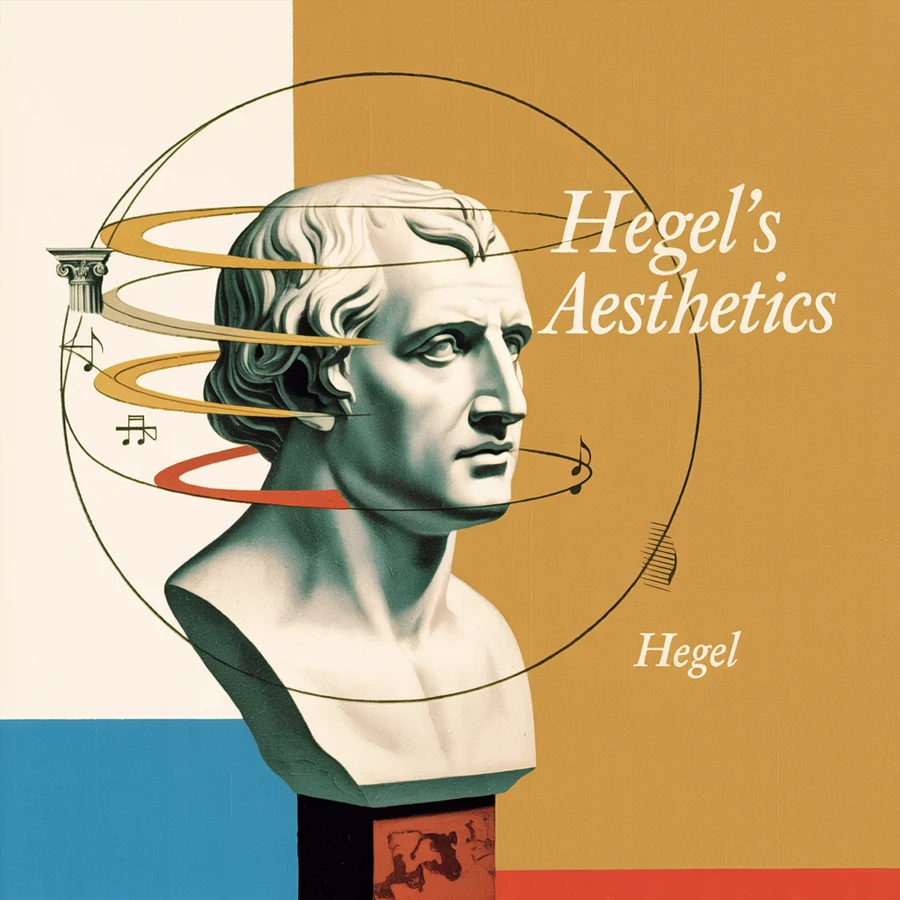
Hegel's Aesthetics, formally titled Lectures on Aesthetics or Lectures on Fine Art, is a foundational text in Western philosophy of art compiled from lecture notes delivered by Georg Wilhelm Friedrich Hegel at the University of Berlin between 1818 and 1829. Published posthumously in 1835 by his student Heinrich Gustav Hotho, this work presents Hegel's comprehensive system of aesthetics as part of his broader philosophical project. The text examines art as a sensuous manifestation of the Absolute Spirit, arguing that art represents one of the highest forms through which human consciousness comes to understand truth and freedom. Hegel divides art history into three major forms—Symbolic, Classical, and Romantic—each corresponding to different relationships between content and form, and traces the development of architecture, sculpture, painting, music, and poetry through these stages.

Central to Hegel's aesthetic theory is the controversial but influential thesis regarding the "end of art," which suggests that art has completed its highest mission in the modern era and can no longer serve as the supreme mode of expressing absolute truth, having been superseded by religion and ultimately philosophy. This does not mean art ceases to exist, but rather that it no longer occupies the central spiritual and cultural position it once held in ancient Greece. Hegel's analysis emphasizes beauty as the sensuous appearance of the Idea, examining how different art forms and historical periods succeed or fail in achieving a harmonious unity between spiritual content and material expression.
The historical significance of Hegel's Aesthetics cannot be overstated, as it established art history and aesthetic theory as serious philosophical disciplines and profoundly influenced subsequent criticism, art theory, and cultural analysis. His systematic approach to understanding art within historical development shaped Marxist aesthetics, art historical methodology, and continues to inform contemporary debates about the relationship between art, society, and truth. Despite criticisms of his Eurocentrism and his hierarchical ranking of art forms, Hegel's work remains essential reading for understanding how art functions within culture and consciousness, and his insights into the social and spiritual dimensions of artistic creation continue to resonate with scholars, critics, and artists seeking to comprehend art's role in human civilization.

PhilosophyAestheticsGerman Idealism19th CenturyArt TheoryLiterary CriticismMetaphysicsDialecticsRomantic EraContinental PhilosophyHistory of ArtPhilosophy of BeautyHegelian PhilosophyNon-fictionAcademic
PublisherKafka
LanguageEnglish
Source
Stanford Encyclopedia of Philosophy

Similar books

Divan-e-GhalibDivan-e-Ghalib
विचार: महावीर प्रसाद द्विवेदीविचार: महावीर प्रसाद द्विवेदी
Lives of the ArtistsLives of the Artists
The Rime of the Ancient MarinerThe Rime of the Ancient Mariner
The Prelude; or, Growth of a Poet’s MindThe Prelude; or, Growth of a Poet’s Mind
Why I am atheist?Why I am atheist?
To Make the Deaf HearTo Make the Deaf Hear
White NightsWhite Nights
The End of the WorldThe End of the World
The Soul of Man under SocialismThe Soul of Man under Socialism
Tractatus Logico-PhilosophicusTractatus Logico-Philosophicus
A General View of PositivismA General View of Positivism
Against the GrainAgainst the Grain
The Nightingale and the RoseThe Nightingale and the Rose
The Yellow WallpaperThe Yellow Wallpaper
Democracy and EducationDemocracy and Education
Philosophical WorksPhilosophical Works
Critique of Pure ReasonCritique of Pure Reason
DialoguesDialogues
The Problems of PhilosophyThe Problems of Philosophy

Similar audiobooks

Proposed Roads to FreedomProposed Roads to Freedom
Studies in PessimismStudies in Pessimism
Anti-Federalist PapersAnti-Federalist Papers
Path of ProsperityPath of Prosperity