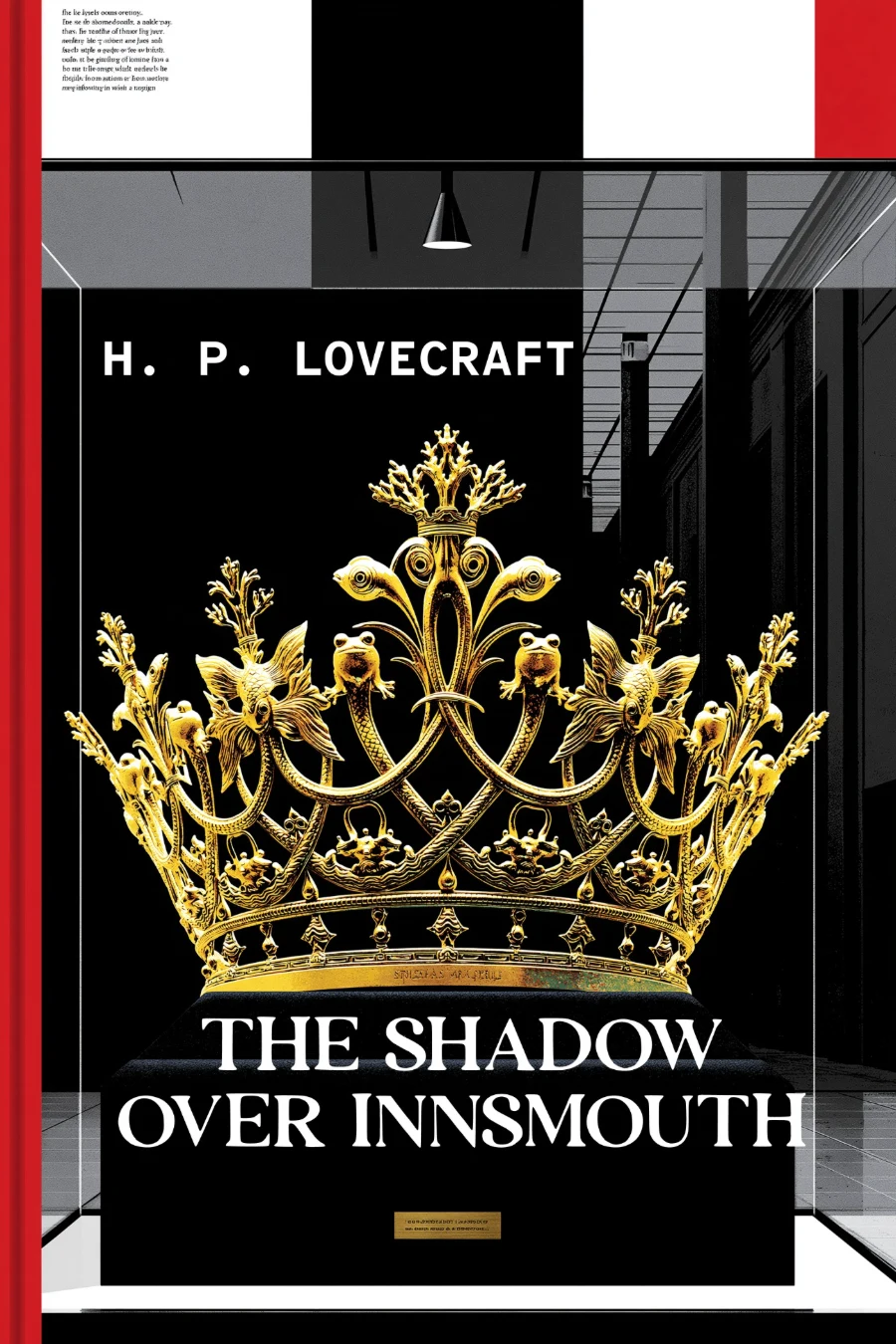
The Shadow Over Innsmouth
In the summer of 1927, a young man on a sightseeing tour of New England diverts to Innsmouth, a half-abandoned seaport on the Massachusetts coast that the railroad timetables seem to want him to skip. The town's docks rot. The churches are shuttered. The grocer warns him not to spend the night. From a drunken townsman he learns the story — a sea captain's pact with something living in the deep reefs off Devil's Reef, a bargain renewed each generation in human bodies, and the unmistakable Innsmouth look that creeps over every native face by their fortieth year. By the time he believes the story, the last bus out has broken down and he is sleeping in the Gilman House, listening to footsteps in the corridor and looking for a way to the roof.
Lovecraft completed The Shadow Over Innsmouth in 1931 and it is the only one of his Cthulhu Mythos tales he published in his lifetime as a stand-alone book. It is also the most propulsive — a real chase in the third act, a real escape, and a final twist that turns the entire genre of investigative horror back on the investigator. Beneath the surface, the story is also Lovecraft's most uncomfortable work: a study of hereditary contamination and racial fear that contemporary critics must read with full awareness of the author's documented racism, even as the formal achievement remains undeniable.
The Shadow Over Innsmouth rewards readers who want the most novelistic of Lovecraft's longer tales — a working town with working geography, a real night of hiding, a chase down decaying streets — and the most uncanny of his endings. It rewards critical readers who want to see weird fiction's most influential mid-period text working in full view, with both its formal power and its ethical limits clearly legible.