The Colour Out of Space
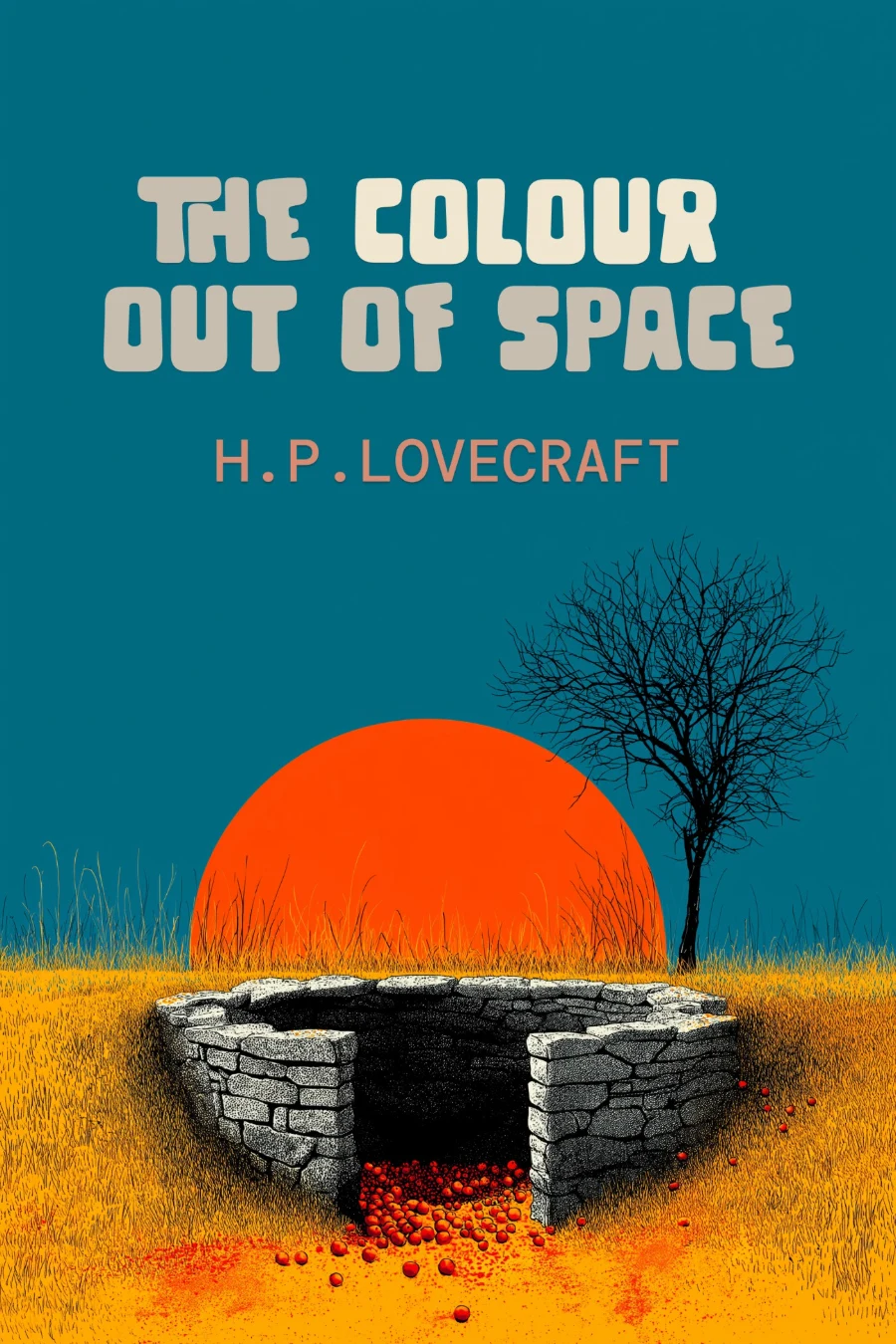
An engineer surveying the watershed west of Arkham, Massachusetts, for a planned reservoir hears local people refuse to talk about a five-acre patch of grey, blasted heath they call "the blasted heath." Pressed, an old man finally tells him what happened to the Gardner family farm in the summer of 1882, after a meteorite struck the well. The stone behaved strangely under the chemist's tools, then dissolved. The vegetables that autumn grew enormous and inedible. The animals in the woods began to move oddly. The Gardners, one by one, began to change — not into something, but away from themselves, draining out into a colour for which there is no word.
Lovecraft considered this 1927 story his own best work, and many critics agree. It is the purest distillation of his central insight: that the universe contains things to which our perceptual and conceptual equipment is simply unequal. The horror is not a monster but a wavelength. The story's slow seepage — through the well, through the apple harvest, through the children's dreams, through the wife's mind — is among the most patient and inevitable in horror literature. Stephen King has called it the most genuinely frightening short story in the language.
The Colour Out of Space rewards readers who appreciate dread that builds geologically rather than dramatically, who prefer cosmic horror that bypasses theology for physics, and who can feel the chill in the engineer's closing recognition that the reservoir is about to bury the heath under millions of gallons of drinking water for the city. It is the founding text of an entire mode of weird fiction — the contamination story — and reads, almost a century on, as if it were warning about something we have only recently learned to be afraid of.