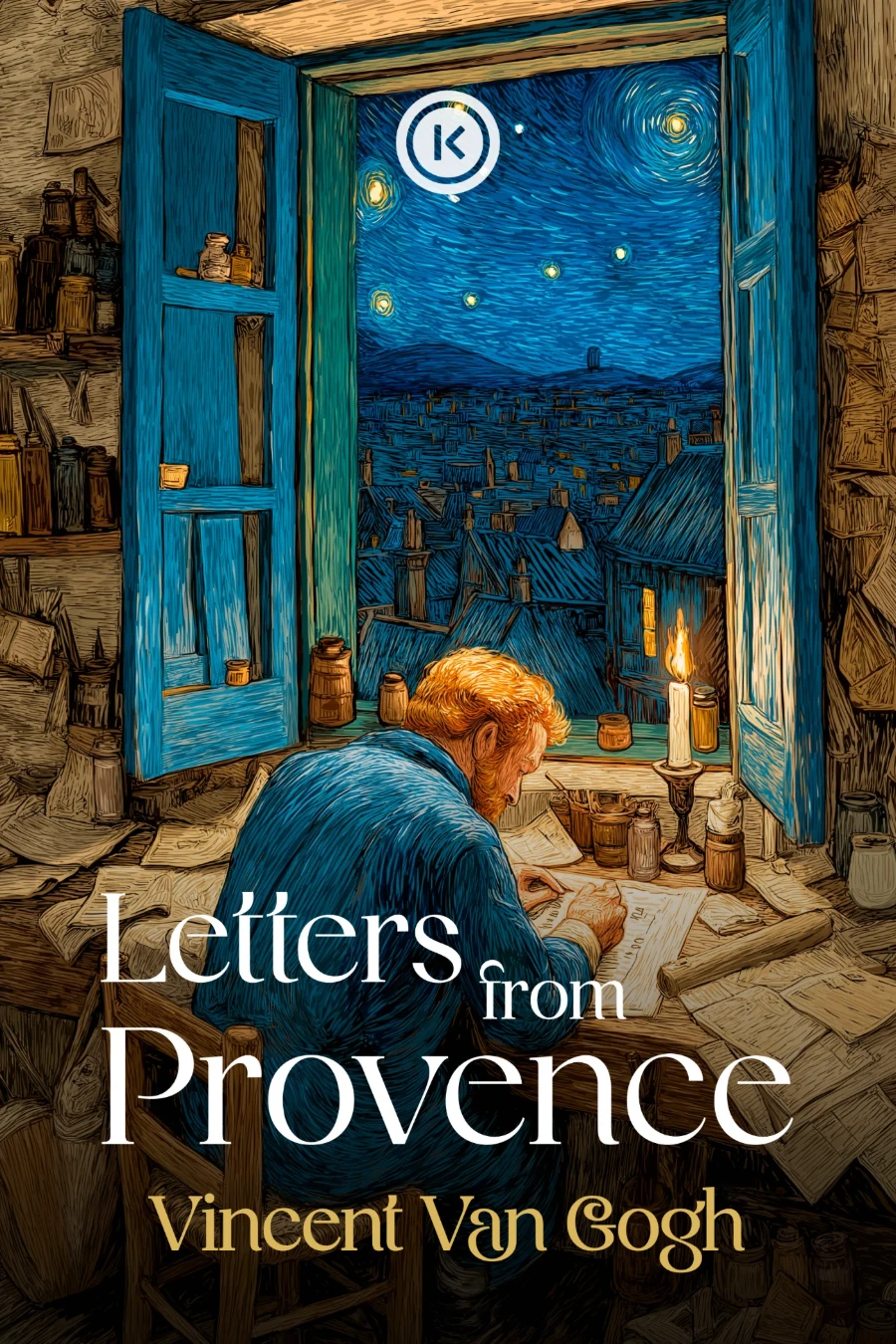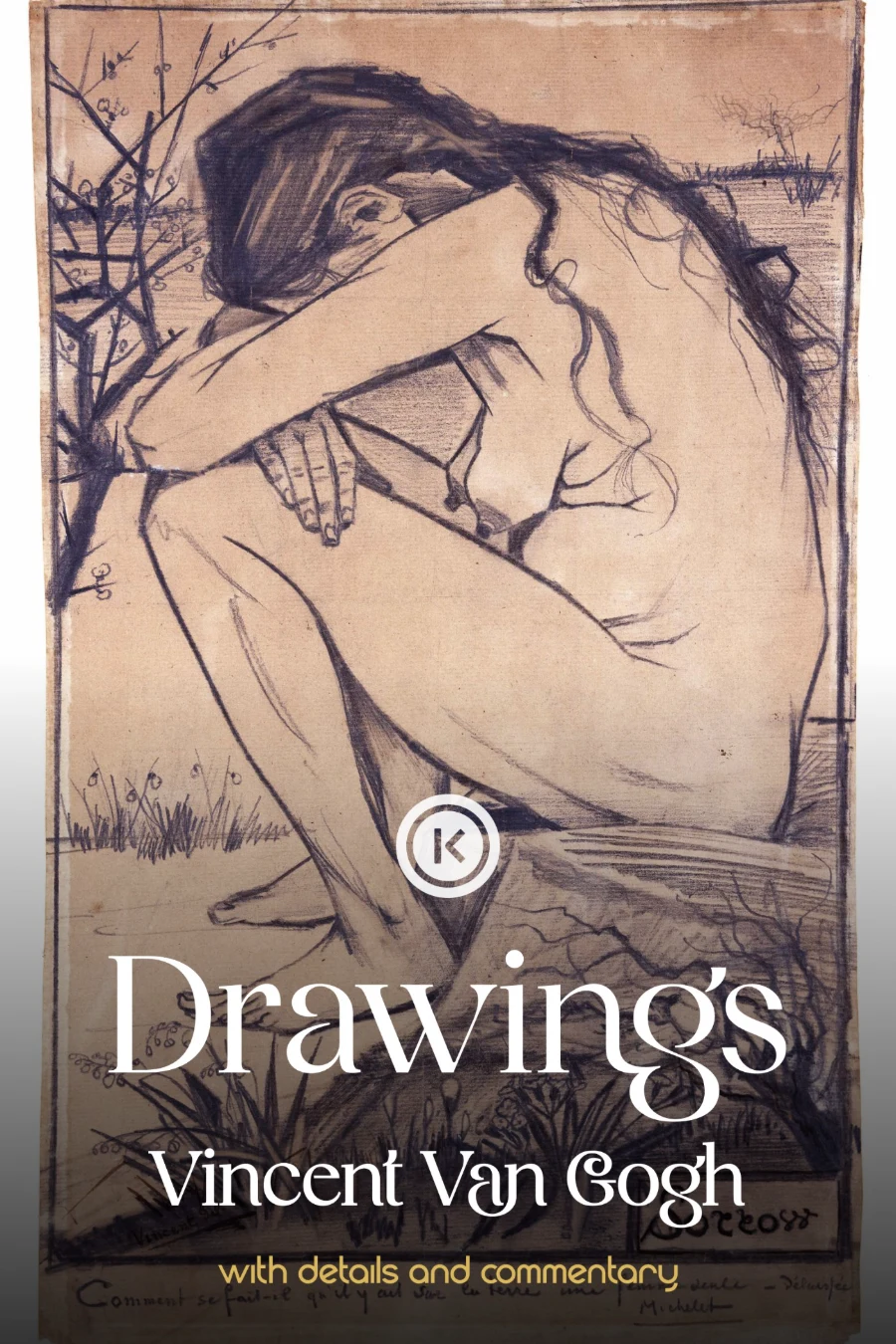
Before Vincent van Gogh became synonymous with swirling starry nights and sunflowers ablaze with color, he was a man learning to see. This collection presents the artist in his most vulnerable and determined state—pencil, pen, and charcoal in hand, teaching himself the fundamentals of his craft through thousands of hours of patient observation. We encounter laborers bent over fields, weathered faces of peasants, gnarled tree roots, and the austere landscapes of the Dutch countryside and southern France. These are not preliminary studies for famous paintings but complete works in themselves, revealing an artist who believed drawing was the skeleton upon which all art must be built.
What emerges from these pages is the texture of obsessive dedication. Van Gogh's lines are rarely elegant in the conventional sense—they're urgent, repetitive, almost frantic in their need to capture weight, volume, and the essential character of a subject. His hatching and cross-hatching create dense atmospheric worlds where poverty is rendered without sentimentality and nature appears both harsh and sacred. The drawings chart his technical evolution but also his philosophical one, as he moves from rigid academic exercises to a more expressive, emotionally charged approach where the movement of the hand across paper becomes inseparable from the feeling he wishes to convey.
This collection rewards the reader who understands that artistic mastery is built from unglamorous repetition and clear-eyed study. It speaks to anyone interested in the apprenticeship of genius, in witnessing how someone transforms from a determined amateur into an artist with a singular vision. The drawings remind us that before innovation comes discipline, and that the greatest creative leaps are rooted in countless hours spent simply looking at the world and trying, through sheer force of will, to understand it.