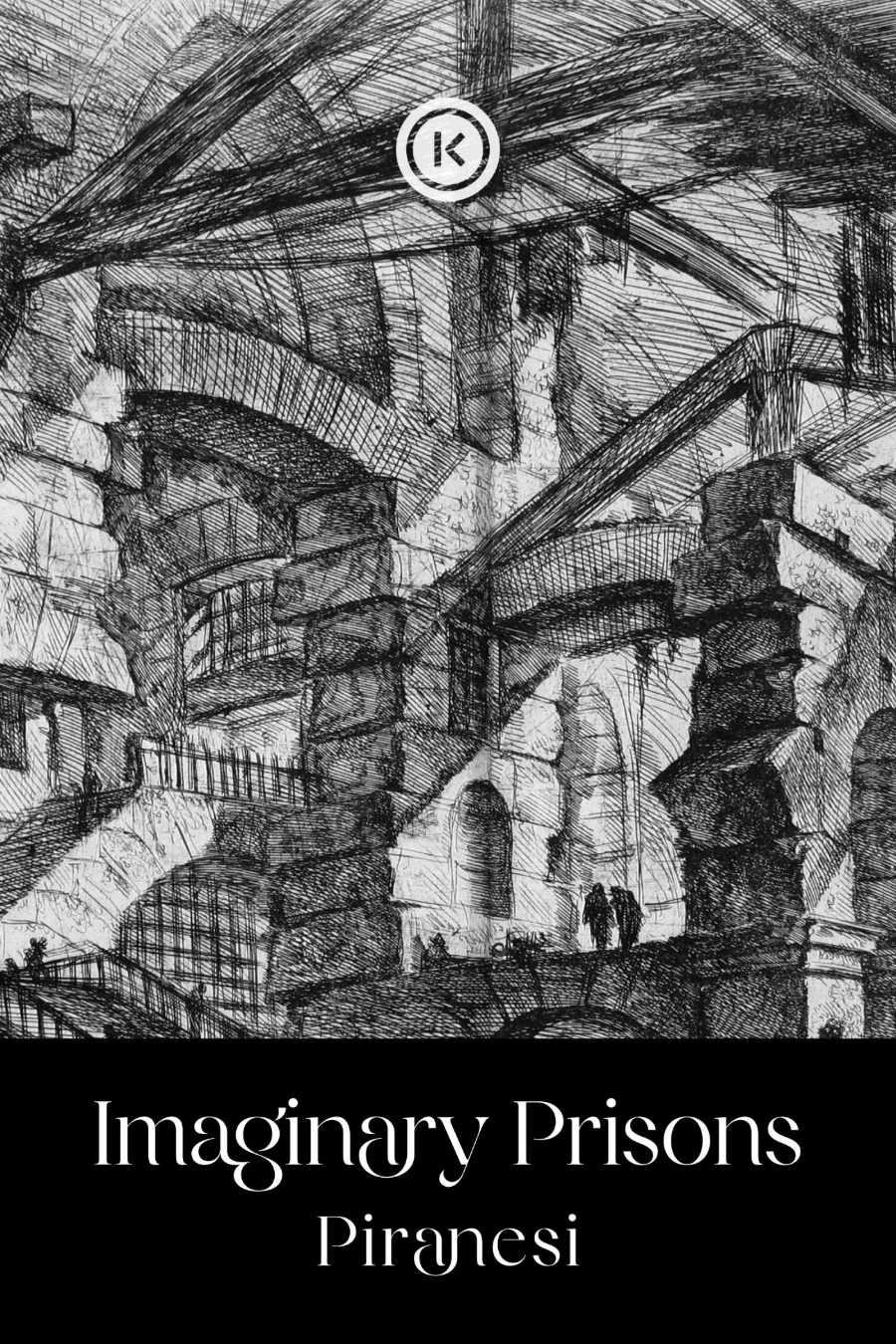
Imaginary Prisons (Carceri d'invenzione)
15 min
2,884 words
en
Sixteen etchings from Giovanni Battista Piranesi's Carceri d'invenzione (Imaginary Prisons) — the most influential architectural fantasies ever created. First published around 1750 and reworked in a darker, more terrifying second edition in 1761, these prints depict vast subterranean vaults of impossible architecture: staircases that lead nowhere, bridges spanning unfathomable chasms, chains and pulleys operating unknown machines, and tiny human figures dwarfed by structures that extend beyond the edges of the plate into implied infinity. Piranesi, a Venetian architect who built almost nothing, reimagined Rome as an infinite, sublime ruin. The Carceri are the origin point for every dystopian vision of architecture — from Escher's impossible geometries to the industrial hellscapes of Blade Runner and Alien. They have haunted writers from De Quincey and Coleridge through Borges, Kafka, and Calvino. No other prints have had such an enduring influence on the Western imagination of space, confinement, and the terrifying sublime.
PublisherKafka, Kafka Originals
LanguageEnglish
Source
Wikimedia CommonsPublic domain museum collections