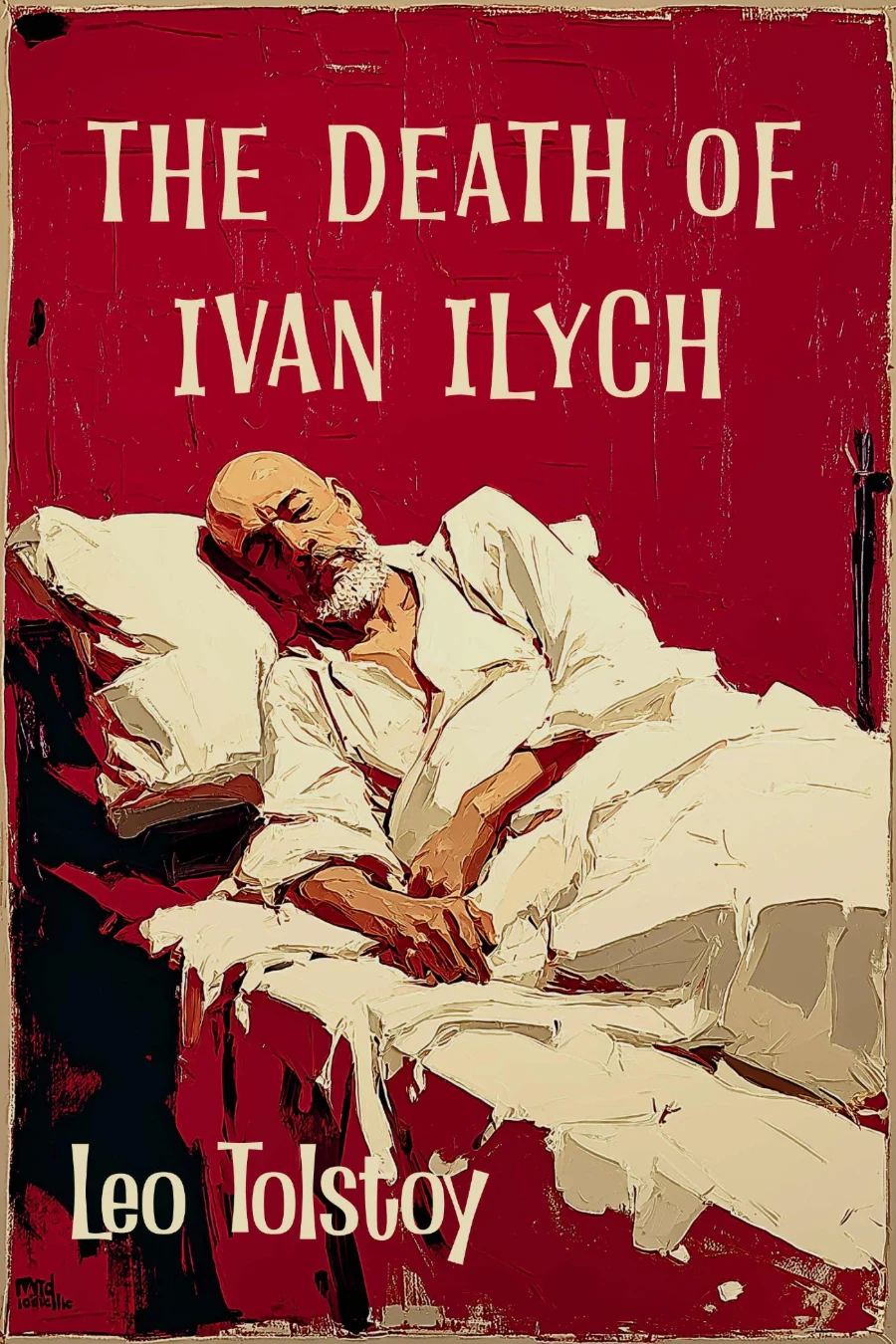
The Death of Ivan Ilych
Translated by Louise and Aylmer Maude
1h 52m
22,346 words
en
In a private room at the Law Courts, a group of magistrates reads the obituary of their colleague, Ivan Ilych Golovin. Their immediate reaction to the news is arithmetic: calculating the appointments and transfers his vacant post will trigger. This is the society Ivan spent his life trying to impress.
Rewinding from the funeral, the story tracks the respectable judge as an incurable illness interrupts his climb up the social ladder. Confined to his bed, Ivan is alienated from everything he once valued. Surrounded by a family that resents his suffering and doctors who treat his failing body like an impersonal legal dispute, he recognizes that his carefully managed bourgeois existence was a mistake.
Written after Leo Tolstoy’s own mid-life spiritual crisis, the novella strips away the distractions of nineteenth-century materialism to confront the absolute certainty of death. Translated by Louise and Aylmer Maude.
FictionNovellaRussian Literature19th CenturyRealismPhilosophical FictionExistentialismMortalityDeath and DyingMeaning of LifeSocial CriticismBourgeois SocietySpiritual AwakeningPsychological FictionClassical Literature
PublisherKafka
LanguageEnglish