When William Came
4h 10m
49,965 words
en
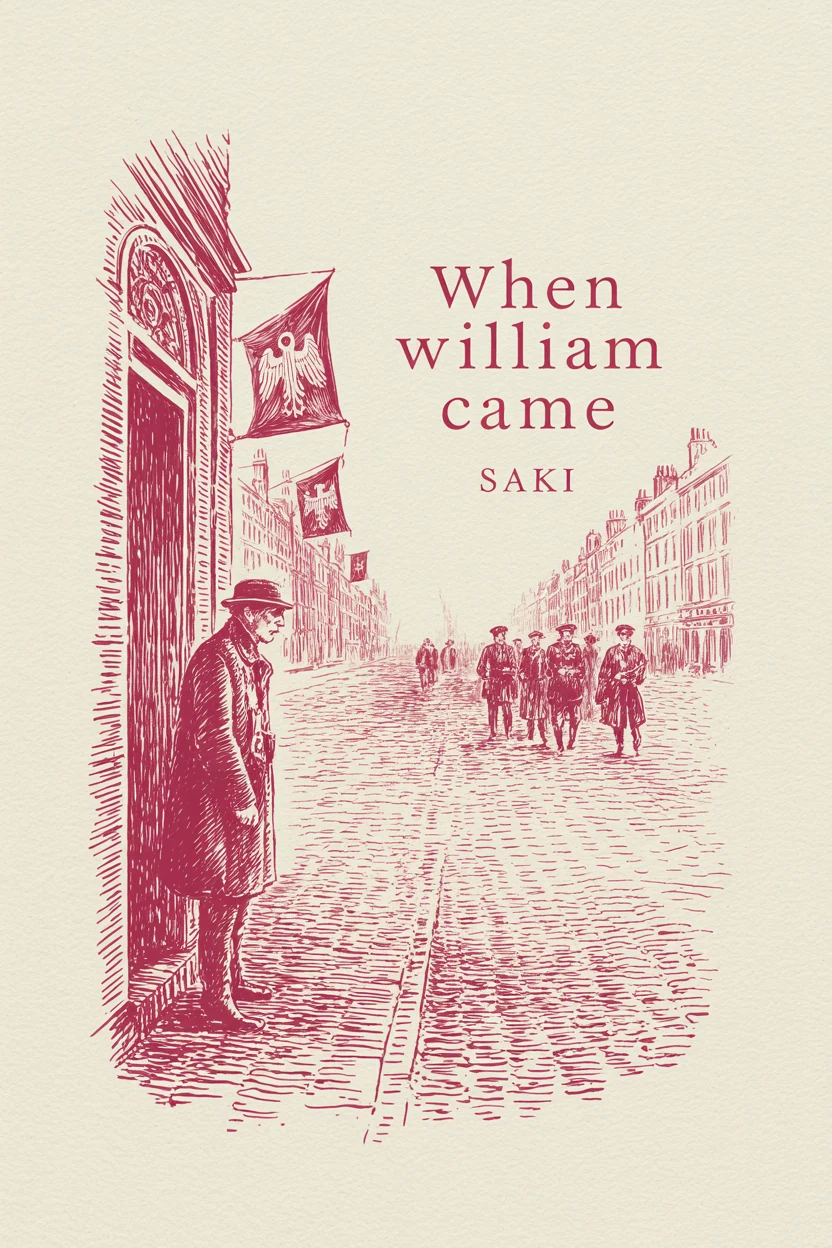
When William Came, published in 1914 just months before the outbreak of the First World War, imagines a Britain under German occupation. Murrey Dorvington returns from abroad to find London superficially unchanged — the shops are open, the dinner parties continue, Society still cares about the same trivial things. But the Union Jack no longer flies, and the question of who collaborates, who resists, and who simply doesn't notice becomes Saki's sharpest instrument of social satire. Written with the same acid wit as his short stories, the novel is both a prophetic warning and a merciless portrait of a ruling class too comfortable to defend what it claims to value.