The English Constitution
8h 10m
97,991 words
en
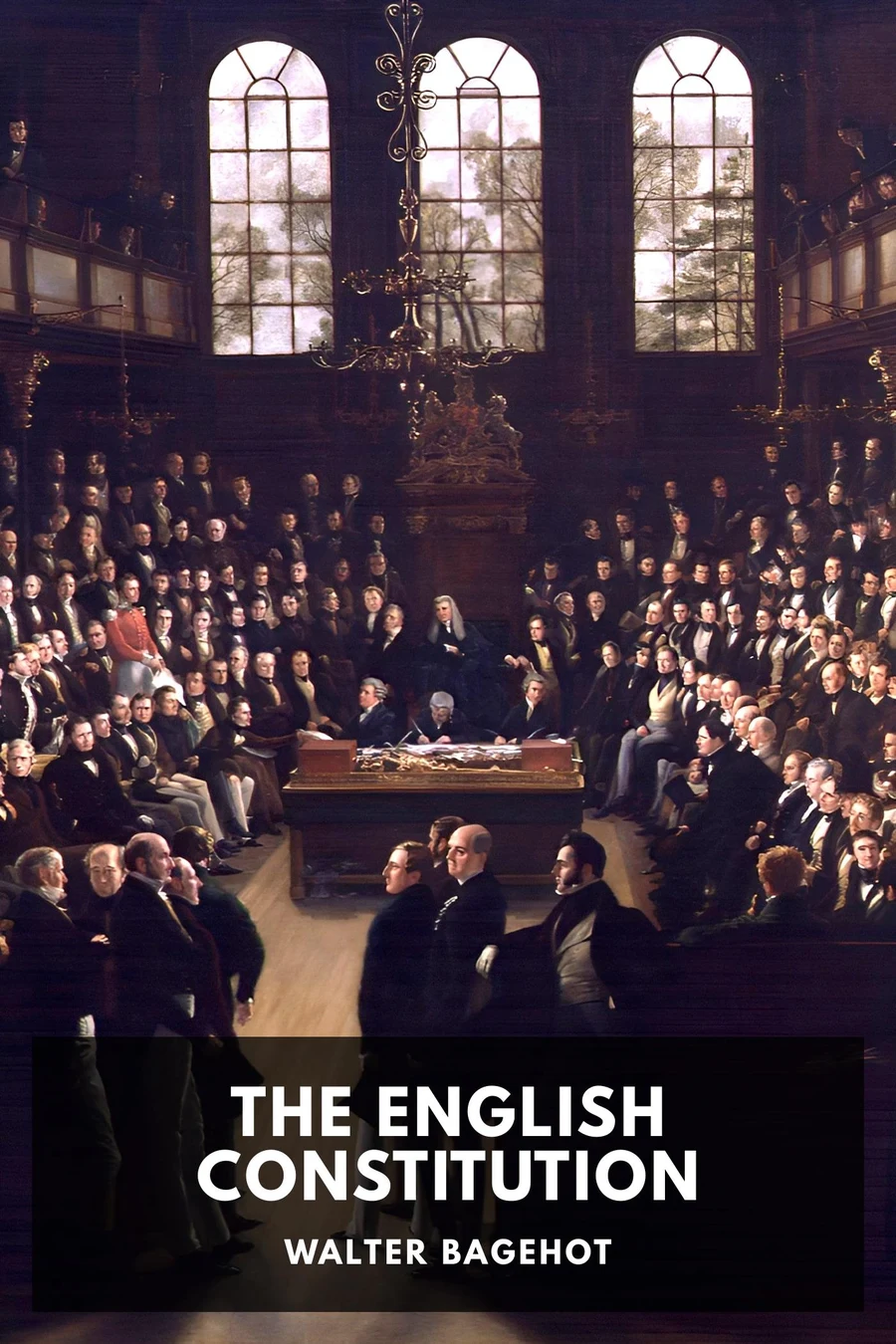
The challenge facing Walter Bagehot while writing the essays that became his study of The English Constitution is that, infamously, there is no “English constitution,” at least, not one that has ever been written down. The government of Great Britain and Ireland, in Bagehot’s day, is the result of centuries of evolution, and so is the product of custom, precedent, reform, and a great degree of chance. As a “constitutional monarchy,” the theory of government that Bagehot describes entails chiefly the role of the monarch, the main legislative assembly—the House of Commons—and its counterpart in the “upper house,” the House of Lords which, despite its apparently higher social register, is in reality a subordinate assembly. In these arrangements, the Reform Acts of 1832 and 1867 (the latter being debated while Bagehot was writing his essays) played a major role, and loom large in Bagehot’s discussion of the institutions of his day. The second edition of his work, published in 1872, takes a considered view of effects of the second phase of reform. At the time of writing, Bagehot was well settled into his role as Editor of The Economist, then a newspaper under the ownership of his father-in-law. Bagehot’s prose remains eminently readable, showing a light touch and sense of humor in explaining sometimes arcane arrangements of government, and often reflecting on its contrast with American practice. His sturdy prose bears comparison with that of his contemporary, the novelist Anthony Trollope. In some ways, The English Constitution could be seen as the theoretical basis for Trollope’s political novels, and those novels (especially Phineas Finn, Phineas Redux, and The Prime Minister) as commentaries on Bagehot’s theory. While now dated, Bagehot’s essays were widely influential and remain the standard work on British constitutional arrangements. Woodrow Wilson took inspiration from Bagehot in his own thesis, Congressional Government, in which he called Bagehot “the most sagacious of political critics,” without peer in “that field of critical exposition in which he was supreme, the philosophical analysis … of the English Constitution.”
PublisherStandard Ebooks
LanguageEnglish
Source
CopyrightThe source text and artwork in this ebook are believed to be in the United States public domain; that is, they are believed to be free of copyright restrictions in the United States. They may still be copyrighted in other countries, so users located outside of the United States must check their local laws before using this ebook. The creators of, and contributors to, this ebook dedicate their contributions to the worldwide public domain via the terms in the [CC0 1.0 Universal Public Domain Dedication](https://creativecommons.org/publicdomain/zero/1.0/).