Tartuffe
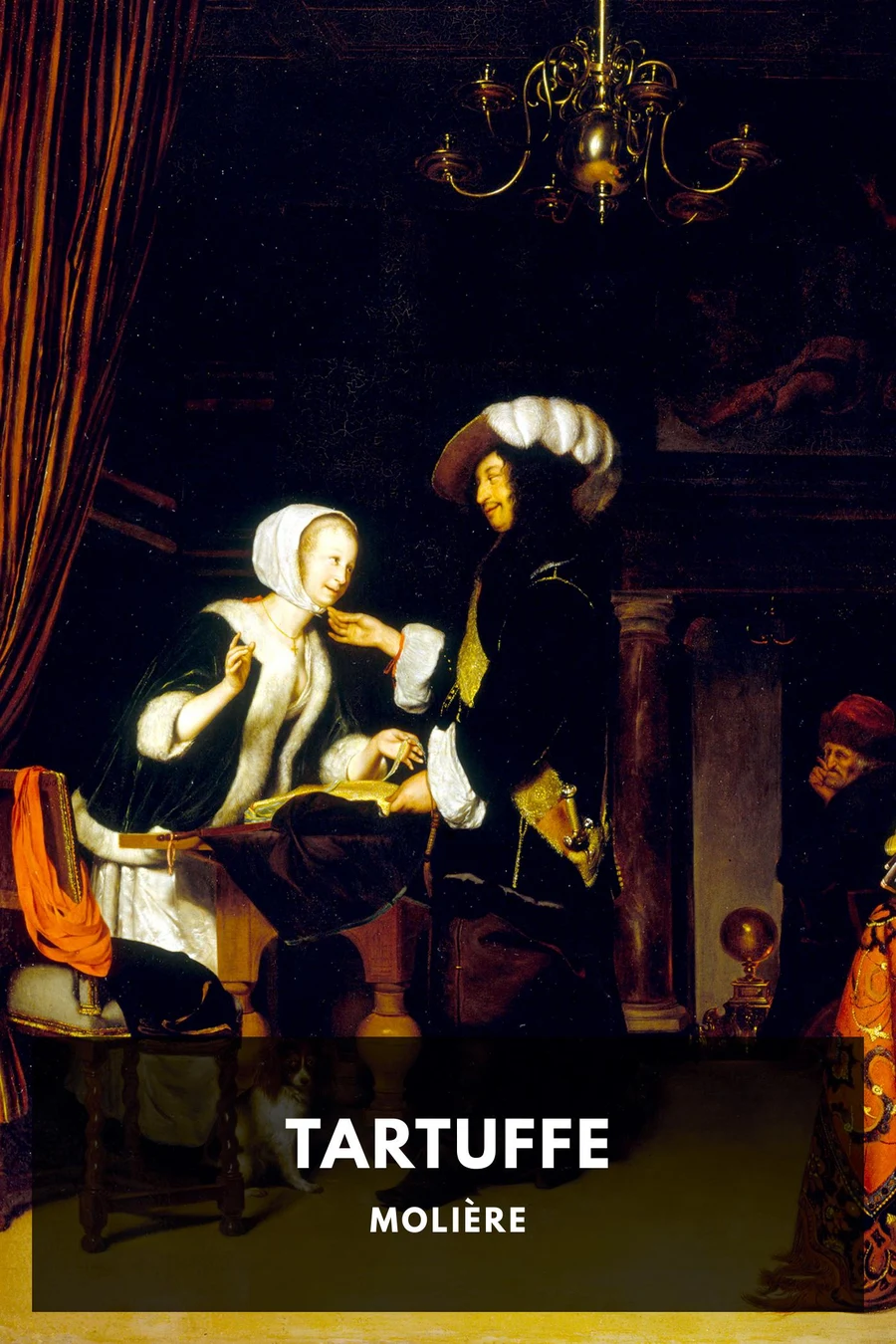
The first three acts of Molière’s Tartuffe were first performed for Louis XIV in 1664, but the play was almost immediately suppressed—not because the King disliked it, but because the church resented the insinuation that the pious were frauds. After several different versions were written and performed privately, Tartuffe was eventually published in its final five-act form in 1669. A comic tale of man taken in by a sanctimonious scoundrel, the characters of Tartuffe, Elmire, and Orgon are considered among some of the great classical theater roles. As the family strives to convince the patriarch that Tartuffe is a religious fraud, the play ultimately focuses on skewering not the hypocrite, but his victims, and the hypocrisy of fervent religious belief unchecked by facts or reason—a defense Molière himself used to overcome the church’s proscriptions. In the end, the play was so impactful that both French and English now use the word “Tartuffe” to refer to a religious hypocrite who feigns virtue. In its original French, the play is written in twelve-syllable lines of rhyming couplets. Curtis Hidden Page’s translation invokes a popular compromise and renders it into the familiar blank verse without rhymed endings that was popularized by Shakespeare. The translation is considered a seminal one by modern translators.