Les Roses
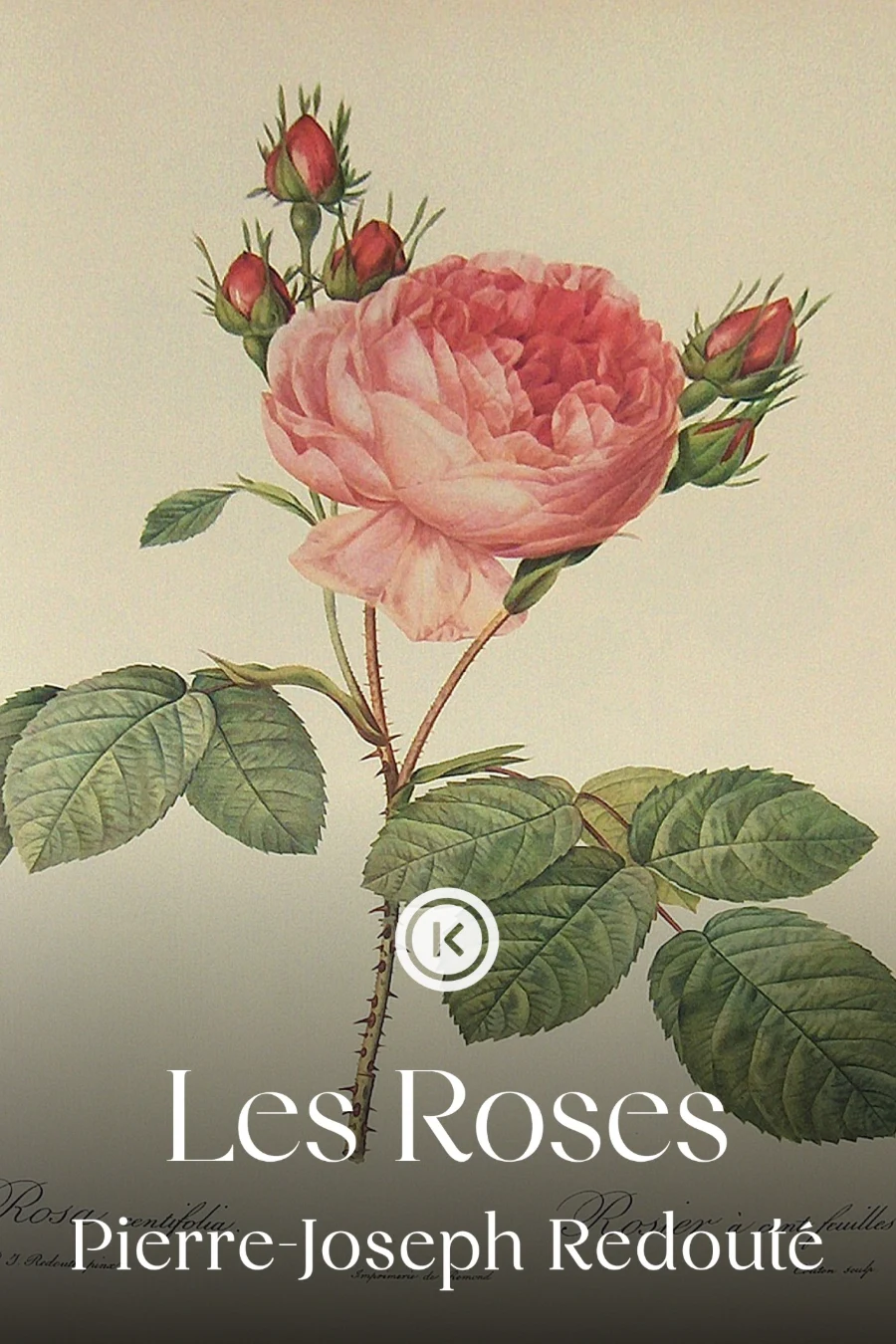
Forty-three hand-colored stipple engravings from Pierre-Joseph Redouté's Les Roses — the three-volume album of rose portraits published in Paris between 1817 and 1824 and still considered the most beautiful botanical book ever produced. Redouté, a Belgian-born flower painter who worked first for Marie Antoinette and then for Empress Joséphine, found his great subject in the rose gardens of Joséphine's estate at Malmaison, where the empress had assembled the world's largest collection of rose varieties — roses from China, from Persia, from the wild hedgerows of Europe, all gathered before the modern hybrid teas of the late nineteenth century replaced them. Working in the new technique of stipple engraving — building images from thousands of tiny dots rather than lines — Redouté produced botanical portraits of unprecedented delicacy: each rose appears with a few leaves and a stem, set against a pure white background, the petals rendered in luminous gradations of pink, red, and white. The book is a memorial as much as a catalogue, since many of the old garden roses he painted have since vanished. This collection presents the most beloved plates from the three volumes — Centifolias, Damasks, Gallicas, the Moss Roses, and the China roses — preserving a flower kingdom that no longer exists.