Lavengro
33h 56m
407,003 words
en
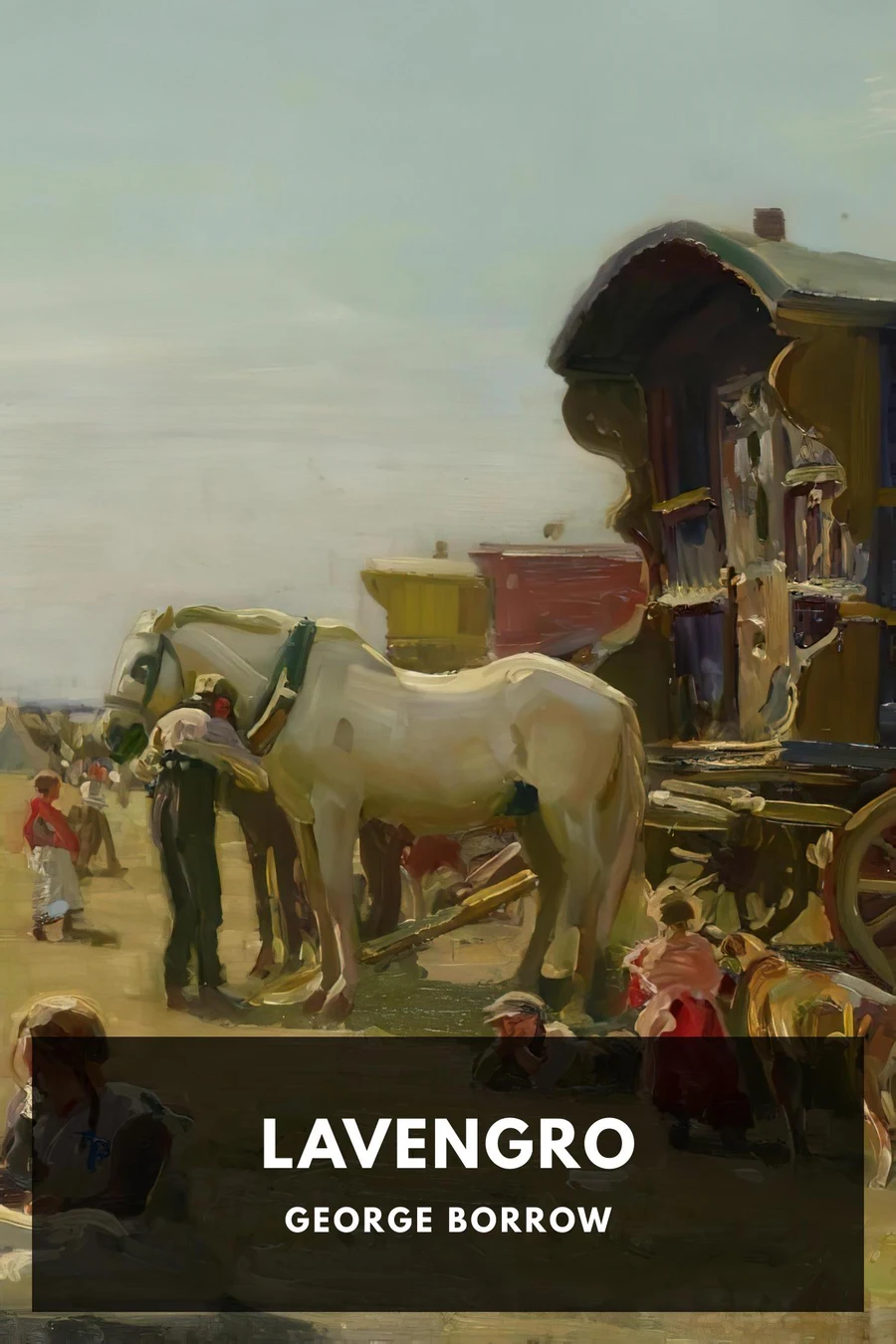
Lavengro, the Scholar, the Gypsy, the Priest, published in 1851, is a heavily fictionalized account of George Borrow’s early years. Borrow, born in 1803, was a writer and self-taught polyglot, fluent in many European languages, and a lover of literature. The Romany Rye, published six years later in 1857, is sometimes described as the “sequel” to Lavengro, but in fact it begins with a straight continuation of the action of the first book, which breaks off rather suddenly. The two books therefore are best considered as a whole and read together, and this Standard Ebooks edition combines the two into one volume. In the novel Borrow tells of his upbringing as the son of an army recruiting officer, moving with the regiment to different locations in Britain, including Scotland and Ireland. It is in Ireland that he first encounters a strange new language which he is keen to learn, leading to a life-long passion for acquiring new tongues. A couple of years later in England, he comes across a camp of gypsies and meets the gypsy Jasper Petulengro, who becomes a life-long friend. Borrow is delighted to discover that the Romany have their own language, which of course he immediately sets out to learn. Borrow’s subsequent life, up to his mid-twenties, is that of a wanderer, traveling from place to place in Britain, encountering many interesting individuals and having a variety of entertaining adventures. He constantly comes in contact with the gypsies and with Petulengro, and becomes familiar with their language and culture. The book also includes a considerable amount of criticism of the Catholic Church and its priests. Several chapters are devoted to Borrow’s discussions with “the man in black,” depicted as a cynical Catholic priest who has no real belief in the religious teachings of the Church but who is devoted to seeing it reinstated in England in order for its revenues to increase. Lavengro was not an immediate critical success on its release, but after Borrow died in 1881, it began to grow in popularity and critical acclaim. It is now considered a classic of English Literature. This Standard Ebooks edition of Lavengro and The Romany Rye is based on the editions published by John Murray and edited by W. I. Knapp, with many clarifying notes.
PublisherStandard Ebooks
LanguageEnglish
CopyrightThe source text and artwork in this ebook are believed to be in the United States public domain; that is, they are believed to be free of copyright restrictions in the United States. They may still be copyrighted in other countries, so users located outside of the United States must check their local laws before using this ebook. The creators of, and contributors to, this ebook dedicate their contributions to the worldwide public domain via the terms in the [CC0 1.0 Universal Public Domain Dedication](https://creativecommons.org/publicdomain/zero/1.0/).