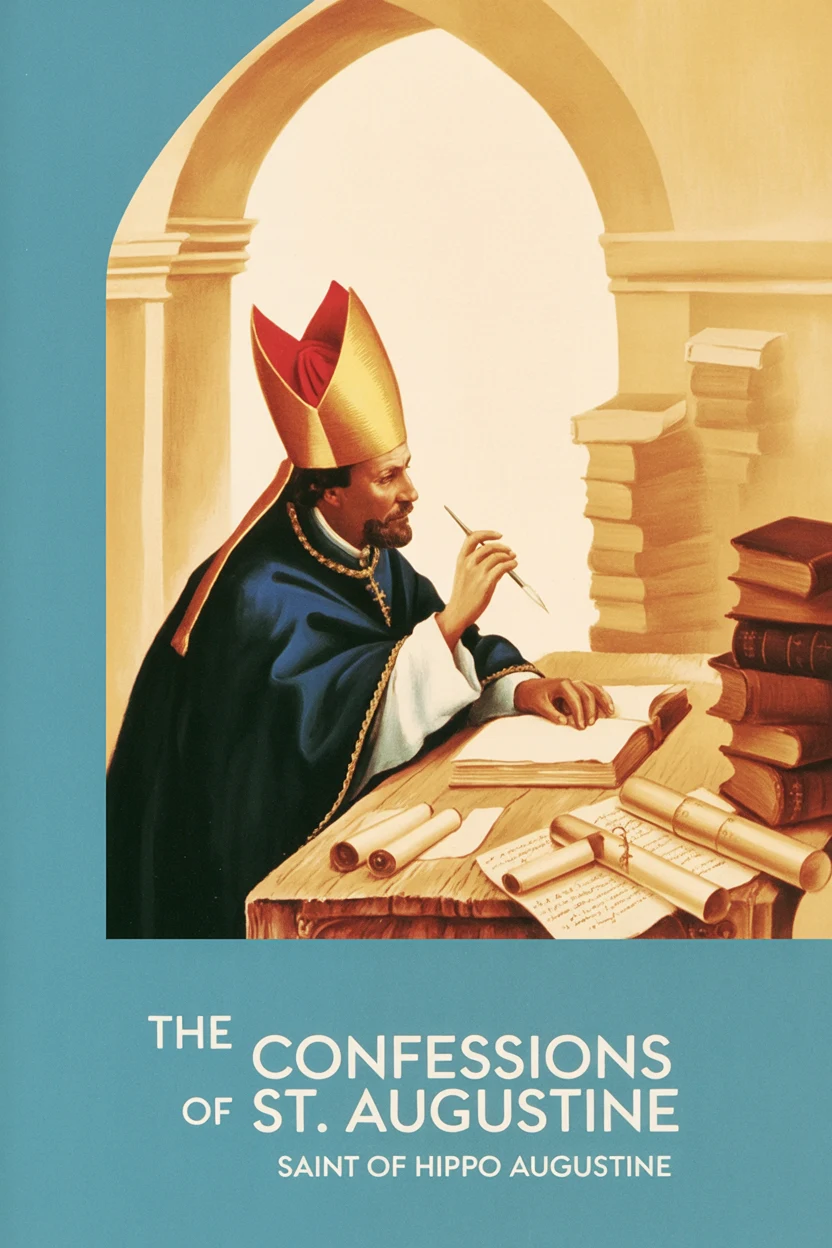
The Confessions of St. Augustine
Translated by Edward Bouverie Pusey
The Confessions of St. Augustine, written around 397-400 CE, is a groundbreaking autobiographical work that chronicles Augustine's spiritual journey from a life of worldly pursuits and philosophical wandering to his conversion to Christianity. The work is structured as a prayer addressed directly to God, divided into thirteen books that trace Augustine's youth in North Africa, his years as a teacher of rhetoric, his involvement with Manichaeism, his intellectual struggles with various philosophies, and ultimately his dramatic conversion in a Milan garden. The later books shift from autobiography to philosophical meditation, exploring the nature of memory, time, and the interpretation of Genesis. Throughout, Augustine candidly reveals his internal conflicts, including his famous prayer from his youth: asking God for chastity and continence, but "not yet."


The work explores profound themes including the nature of sin, the role of divine grace, the conflict between physical desires and spiritual aspirations, and the search for truth and meaning. Augustine's psychological introspection was revolutionary for its time, as he delves deeply into his motivations, examining even seemingly minor sins from his childhood with remarkable self-awareness. His reflections on memory as a vast palace of the mind and his philosophical analysis of time as a subjective human experience represent some of the most sophisticated thinking of late antiquity.
The Confessions is considered the first Western autobiography in the modern sense and established a template for the genre of spiritual memoir that would influence writers for centuries to come. Its historical significance extends beyond literature into theology, philosophy, and psychology. Augustine's articulation of original sin, grace, and the human will shaped Christian doctrine for over a millennium and influenced figures from Thomas Aquinas to Martin Luther. The work's combination of personal narrative, theological reflection, and philosophical inquiry creates a timeless meditation on human nature, redemption, and the search for God that continues to resonate with readers across religious and cultural boundaries.