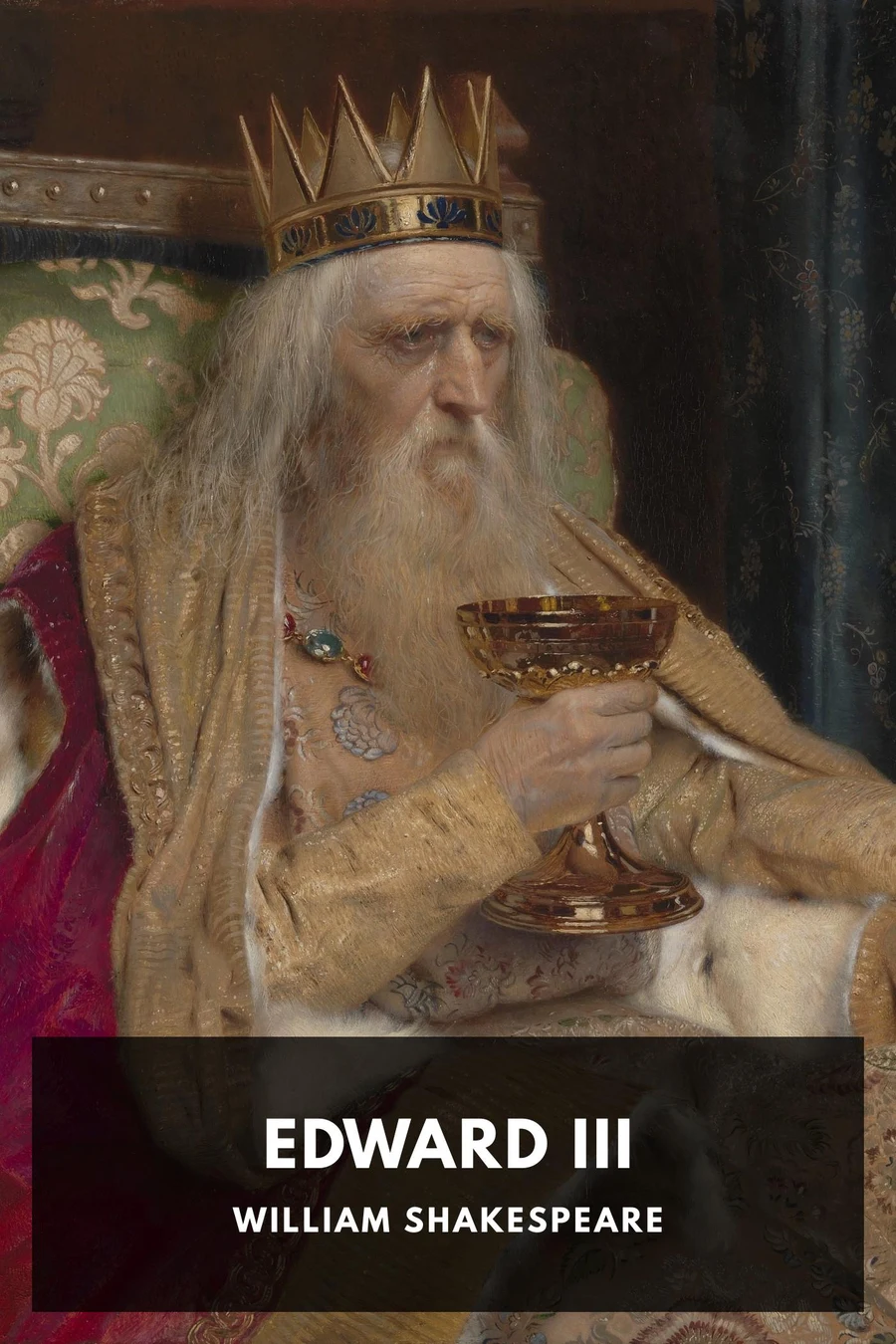
Edward III
The authorship of Edward III has been up for debate ever since it was first published in 1596. Its publisher, Cuthbert Burby, published it without listing an author, and any records that might have shed light on the author’s name (or names) were destroyed in the Great Fire of London in 1666. In the 1760s, the acclaimed scholar Edward Capell was one of the first to claim that William Shakespeare might have been the author. Many other academicians support this claim, or at least suggest Shakespeare partially wrote it, as certain archaic or obscure words and phrases found in the canonical Shakespearean plays also appear in this one. Others argue that Shakespeare would never write something so historically inaccurate; suggestions of possible alternative playwrights include Thomas Kyd, Christopher Marlowe, Michael Drayton, Thomas Nashe, and George Peele. While the legitimate authorship may never come to light, Edward III has become accepted as part of Shakespeare’s canon of plays. After the King of France passes away, a new heir must take the throne; without any brothers or sons in the direct line, the crown falls to his nephew, King Edward of England. French nobles refuse to hand over France to the English, claiming that the right of succession should never have passed through his mother Isabel, and order Edward to acknowledge King John as the rightful successor. These disputed claims to the kingdom of France launch the Hundred Years’ War. This Standard Ebooks edition is based on G. C. Moore Smith’s 1897 edition.